


Roofing Contractors in Gresham Oregon: A Homeowner's Checklist Before Hiring

If you are comparing roofing contractors in Gresham, Oregon, a clear process can make the decision feel less complicated. Start by checking credentials, asking what an estimate includes, and comparing the same details across proposals. This guide walks through those steps and connects Gresham homeowners with our broader Portland metro roofing services and city guides.
What Roofing Services Can Gresham Homeowners Ask About?
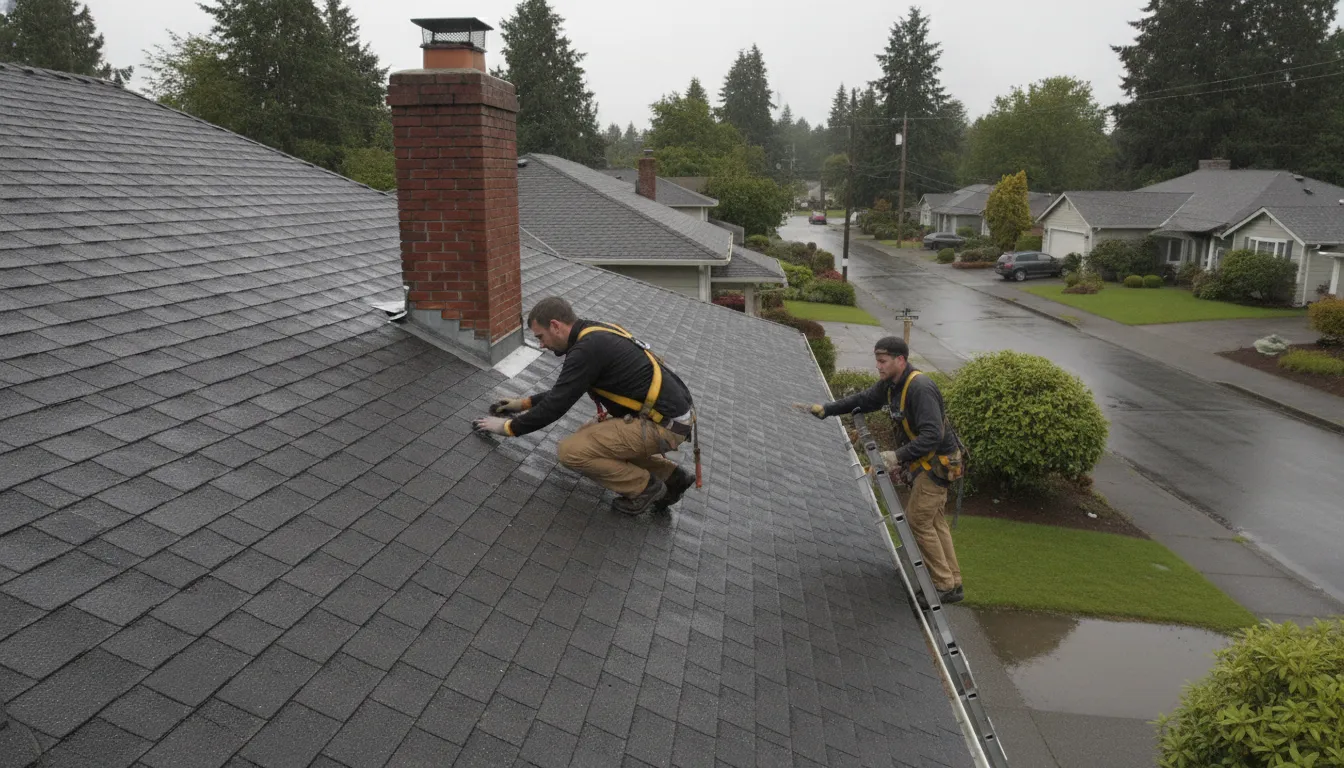
A roofing contractor may help with a single concern, a planned replacement, or an assessment of the roof’s overall condition. Before you call, write down what you have noticed and what you want to understand. A concise description helps a contractor prepare for the conversation without requiring you to diagnose the roof yourself.
Common residential roofing needs include:
- Roof replacement:
Removing an existing roof and installing a new roofing system when repair is not the right long-term answer.
- Roof repair:
Addressing a localized issue, such as damaged roofing material or a leak, when the rest of the roof may remain serviceable.
- Roof inspection:
Looking over the roof and explaining visible conditions, possible next steps, and whether additional evaluation is needed.
- Flat roofing:
Evaluating and working on low-slope roof areas, which use different systems and details than a typical sloped shingle roof.
Ask the contractor to explain what they observed, what work they recommend, and why. A sound recommendation should distinguish an immediate repair from a broader replacement discussion. If you are not sure which category fits, that is a reasonable thing to ask during an assessment.
It can help to be specific about your goal. If you are trying to stop a leak, explain where you see water indoors and whether the issue has happened once or repeatedly. If you are planning ahead, say whether your priority is understanding the roof’s condition, comparing replacement materials, or setting a project timeline. A contractor can then focus the discussion on the decision in front of you instead of assuming that every inquiry calls for the same work.
SA Roofing provides residential roof replacement, repair, inspections, and flat roofing services. You can review the company’s residential roofing information or its broader roofing services before deciding what questions to bring to an estimate.
How Can You Verify a Gresham Roofer Is Licensed and Bonded?
In Oregon, homeowners can use the Construction Contractors Board (CCB) to check contractor information. Start with the contractor’s full business name or license number, then confirm that the record belongs to the company you are considering. The Oregon Construction Contractors Board is the state resource for contractor licensing information.
Do not rely only on a logo, a brief online listing, or a verbal assurance. Confirm that names match across the estimate, business website, and licensing record. If anything is unclear, ask the contractor to explain the discrepancy before you sign an agreement. Take a moment to check the record yourself; it gives you a direct way to verify the business rather than depending on a copied description.
Use this short checklist:
Ask for the contractor’s legal or registered business name and Oregon license information.
Look up the information through the state CCB resource rather than relying only on a search snippet.
Check that the business identity in the record matches the company preparing your proposal.
Ask what insurance coverage applies to the project and how to verify it.
Ask who will perform the work and who your point of contact will be.
It is useful to keep the answers with your estimates. For instance, you might record the name and license details you checked, the date you checked them, and the name of the person who answered your insurance and crew questions. This simple note makes it easier to revisit the same facts when you have several proposals open. If the business name on a proposal differs from the name you looked up, do not assume they are interchangeable; ask for a clear explanation and verify the correct entity.
Licensing and insurance checks are important, but they are only part of the decision. Also consider whether the contractor explains the work in plain language, responds to questions, and provides a written scope you can review at your own pace. For more guidance about evaluating a roofing company, see SA Roofing’s guide to choosing a roofing service you can trust.
What Should You Expect From a Free Roofing Estimate in Gresham?
An estimate is a chance to understand the roof and the proposed work, not a commitment to hire the contractor. Before the visit, make a list of concerns, gather any relevant roof paperwork, and decide who should be present for the conversation. If you have noticed a leak, tell the contractor where it appears inside and when you first saw it. The interior spot is useful context, though the source may be elsewhere on the roof.
A little preparation can help you get more from the appointment. Put your questions in order, starting with the issue that prompted the call. If another household member shares the decision, invite them to join or share your notes afterward. Gather past estimates, receipts, or warranty paperwork if they are available, but do not delay asking about a current concern just because you cannot find old documents. If you have photos of a stain or visible damage taken safely from the ground, you can show those too.
During an estimate, a contractor may inspect accessible roof areas, discuss your concerns, and prepare a written proposal. Ask what the inspection covers and whether any areas could not be evaluated. Roof conditions, access, and the details of the home can affect what can be seen during an initial visit, so a good explanation of limits matters as much as a list of observations.
When the proposal arrives, look for a clear description of:
The recommended work and whether it is a repair or replacement.
Materials and the parts of the roofing system included in the scope.
Removal or disposal work, if applicable.
Any related details that affect the project, such as flashing or ventilation work, when included.
What is excluded, what assumptions the proposal makes, and how unexpected conditions would be handled.
Project communication, expected scheduling process, and who to contact with questions.
Applicable warranty documents and which terms come from the material manufacturer versus the installer.
When reviewing the written scope, try to translate it into a sequence of work you can explain back: what is removed, what is prepared, what is installed, and what is checked or cleaned up. If a line uses a technical term, ask what it means for your roof rather than simply accepting a phrase you do not understand. Ask the contractor to show you how an observation supports the recommended work, and whether there are reasonable alternatives. If you are comparing replacement proposals, SA Roofing’s article on what to expect from a free roofing estimate offers another checklist for reviewing the process.
Clear communication is especially helpful when a project involves more than one decision. If the proposal is difficult to follow, request a revised explanation in writing. You should be able to tell what the contractor plans to do, what the price covers, and which questions still need answers before you make a choice. It is reasonable to take the documents home and compare them without making a decision during the visit.
For example, suppose one proposal describes a roof replacement in a few broad lines, while another lists removal, included system components, disposal, exclusions, and how concealed conditions would be discussed. The second document gives you more to evaluate, even before you compare totals. Ask the first contractor to clarify its scope so you can determine whether the difference is the work itself or simply the level of detail in the paperwork.
What Roof Problems Should Gresham Homeowners Watch For?
Homeowners often start looking for a roofer after spotting a ceiling stain, noticing damaged shingles, or seeing signs of water near a roof opening. These clues are worth discussing, but one visible symptom does not always reveal the full cause. Water can travel before it appears indoors, and conditions on the roof may not be visible from the ground.
When you see a possible problem, note the location and timing. Record whether the stain changes after rain, whether it is near an exterior wall or roof opening, and whether you have seen any visible material damage. Photos taken from a safe place can help you describe what you noticed. Do not climb onto a roof to investigate; walking on roofing can be dangerous and may damage materials.
It can be helpful to separate what you know from what you suspect. “There is a new stain on the upstairs ceiling” is an observation; “the shingles above that room are failing” is a diagnosis that may need professional evaluation. Share the observation and let the contractor explain possible causes. If the issue appears only under certain conditions, such as after a particular kind of weather, note that pattern without assuming it identifies the source.
Ask a contractor to separate observed conditions from possible causes. For example, the proposal should explain what was actually seen and which parts are a professional assessment or recommendation. If a repair is proposed, ask what it is expected to address and whether there are signs that would warrant a follow-up inspection. If replacement is recommended, ask what condition makes repair an unsuitable choice.
For active water intrusion, protect people and belongings first. If it is safe, move items away from the affected area and contain drips with a bucket. Avoid touching wet electrical fixtures or entering an area that appears unsafe. Then contact an appropriate roofing professional to discuss the next steps. For general background on repair decisions, you can also read SA Roofing’s homeowner’s guide to roof repair and its advice on responding to a roof leak.
How Can You Compare Roofing Bids Fairly?
The lowest total is not necessarily the best comparison if proposals describe different work. Before weighing price, check whether each contractor is proposing the same basic scope, materials, removal approach, and related details. If one quote includes work another excludes, ask each company to clarify the difference. That gives you a more useful basis for deciding.
What to compare | Questions to ask | Why it matters |
Scope of work | Is this a repair or replacement? What areas and tasks are included? | Similar project labels can cover different work. |
Materials and components | Which materials and roof-system details are specified? | Material differences can affect what is being proposed. |
Removal and preparation | Does the scope explain removal, disposal, and preparation? | These steps can be treated differently between proposals. |
Exclusions and unknowns | What is not included, and how would hidden conditions be discussed? | Clear boundaries make it easier to understand possible changes. |
Schedule and communication | How will timing updates and questions be handled? | A clear contact process can make the project easier to manage. |
Warranty information | Which written terms apply to materials and installation? | Warranty coverage depends on the actual documents and conditions. |
Turn the table into a side-by-side review rather than relying on memory. Write each contractor’s answer under the same headings. If a proposal is silent about a detail, mark it as “not stated” and ask for clarification; silence does not tell you whether an item is included. Then compare like with like: a repair proposal should not be treated as equivalent to a full replacement proposal, and a replacement with different components may have a different scope.
When you need to compare an estimate line by line, ask the contractor to explain the difference rather than assuming it is an error. A contractor should be able to discuss the recommendation without making you feel rushed. SA Roofing’s proposal review guide describes the kinds of details homeowners may want to see in a roofing proposal.
Costs can vary with roof size, shape, pitch, materials, access, and the work required. No general online range can replace an evaluation of your home. If you want to plan questions about a replacement budget, use the proposal details and discuss the assumptions directly with each contractor rather than treating a broad estimate as a quote.
Consider a simple example: Contractor A has the lower total, but its scope does not say whether disposal or a particular component is included. Contractor B lists those items and explains how concealed conditions are handled. You do not yet know which proposal is the better value; you know there is an information gap. Ask Contractor A to specify the missing items and ask Contractor B to explain any exclusions. Once both scopes are clearer, you can judge the proposed work, communication, and price on a fairer basis. This is not about choosing the longest proposal. It is about understanding what each contractor is offering.
Why Ask Who Will Install Your Roof?
The people doing the work and the people coordinating the project can shape your experience. Before hiring, ask whether the installation is performed by the contractor’s own employees or by subcontractors. Either way, you should know who is responsible for the work, how the crew is supervised, and whom to contact if a question comes up.
Ask practical questions such as:
Who will be the main point of contact before and during installation?
Who will be on site, and who is responsible for coordinating the crew?
How will the team protect the property and handle cleanup?
How will you receive updates if the schedule or scope changes?
Who should you contact after the job if you have a question about the completed work?
SA Roofing’s stated installation model uses direct employees rather than subcontractors. Homeowners can still ask how responsibilities, supervision, and communication work for their specific project. A clear answer helps set expectations and makes it easier to know where to turn during the job.
It is also useful to discuss what you need to do before work begins. Ask whether you should move vehicles or outdoor items, whether access to a particular area is needed, and how the contractor will communicate if weather or another condition affects the schedule. Do not assume that every project follows the same preparation plan. A written explanation tailored to your home can prevent last-minute confusion and gives you a reference if plans change.
How Do You Choose Among Roofing Contractors in Gresham?
After collecting estimates, take time to review the whole experience. Did the contractor listen to your concern? Did the written proposal match what you discussed? Were questions answered directly, including questions about exclusions and warranty documents? A good fit is not only a price; it is also a clear plan and a working relationship that feels comfortable.
You can use this final checklist:
Verify the company identity and Oregon contractor record.
Compare written scopes before comparing totals.
Ask for an explanation of the recommended work and alternatives.
Confirm who performs the installation and who manages communication.
Read the proposal and warranty terms before signing, and ask about anything unclear.
Choose a contractor who gives you room to make an informed decision.
A useful last step is to write down your remaining questions and ask each contractor for a direct answer. Keep the answers with the estimate, along with any revised proposal. If a recommendation changes after a follow-up conversation, ask what new information led to the change. That provides a clear record of how the decision developed and helps you avoid relying on informal recollections later.
SA Roofing serves homeowners throughout the Portland metro area, including Gresham. For a closer look at completed work, browse the roofing project gallery. You can also explore the Portland metro city and neighborhood roofing guides for related local information.
Frequently Asked Questions
How many roofing estimates should I get?
There is no required number that fits every project. Comparing more than one written proposal can help you understand differences in scope and materials. Focus on whether the proposals describe comparable work, not just how many you collect. If you already have two clear, comparable proposals, you may learn more by asking specific follow-up questions than by collecting another estimate with a different scope.
Can I tell whether my roof needs repair or replacement?
Visible symptoms can help you explain the concern, but they do not always show the full condition of the roof. Ask a roofing professional to explain what they observed, why they recommend repair or replacement, and whether another option is reasonable. A helpful discussion connects the recommendation to specific observations and explains any limits to the assessment.
What should I do before a roofing estimate?
Write down your questions, note any leaks or visible concerns, and gather relevant project or warranty paperwork if you have it. Avoid climbing onto the roof. Share when and where you noticed a problem so the contractor has useful context. If more than one person is involved in the decision, arrange to share the proposal and discuss the same questions together.
Should I sign the estimate during the visit?
You can take time to read the proposal and ask questions before deciding. Make sure the scope, price, exclusions, schedule expectations, and applicable written terms are clear to you before signing an agreement. If something is unclear, ask for an explanation or updated document and review it at your own pace.
With a verified contractor, a detailed proposal, and straightforward answers, Gresham homeowners can compare roofing options calmly and choose the approach that fits their home.
Comments