


How to Compare Gutter Installers

Gutter installers should be compared on the same written job, not on the lowest number. A useful proposal names the roof edge, the gutter size and material, where downspouts land, who does the work, and what happens if the fascia is soft. Two bids that both say "new gutters" can still leave water at the foundation.
This guide is for a Portland-metro homeowner pairing gutters with a roof or drainage project. It stays on how to compare companies. It does not diagnose overflow, price a replacement, or walk through fascia repair. Those questions already have their own pages, and this one links to them when they help.
Start with the drainage job, not the brand
Before you call anyone, write down the problem you want solved. Is water spilling over the eave, staining the siding, pooling by the foundation, or dripping behind the gutter? Those are different jobs. A company that only quotes "replace the trough" may miss a roof-edge or discharge problem.
The U.S. Department of Energy's Building America Solution Center explains why the path matters. Rain on a roof can produce thousands of gallons of runoff. Gutters and downspouts should move that water to a slope at least 5 feet from the foundation, or to an underground catchment at least 10 feet away that is not tied into the foundation drain. A rock bed with a liner and drain pipe, or a rain barrel with a planned overflow, can also work. The point for a homeowner is simple: the quote should say where the water goes, not only what metal goes on the eave.
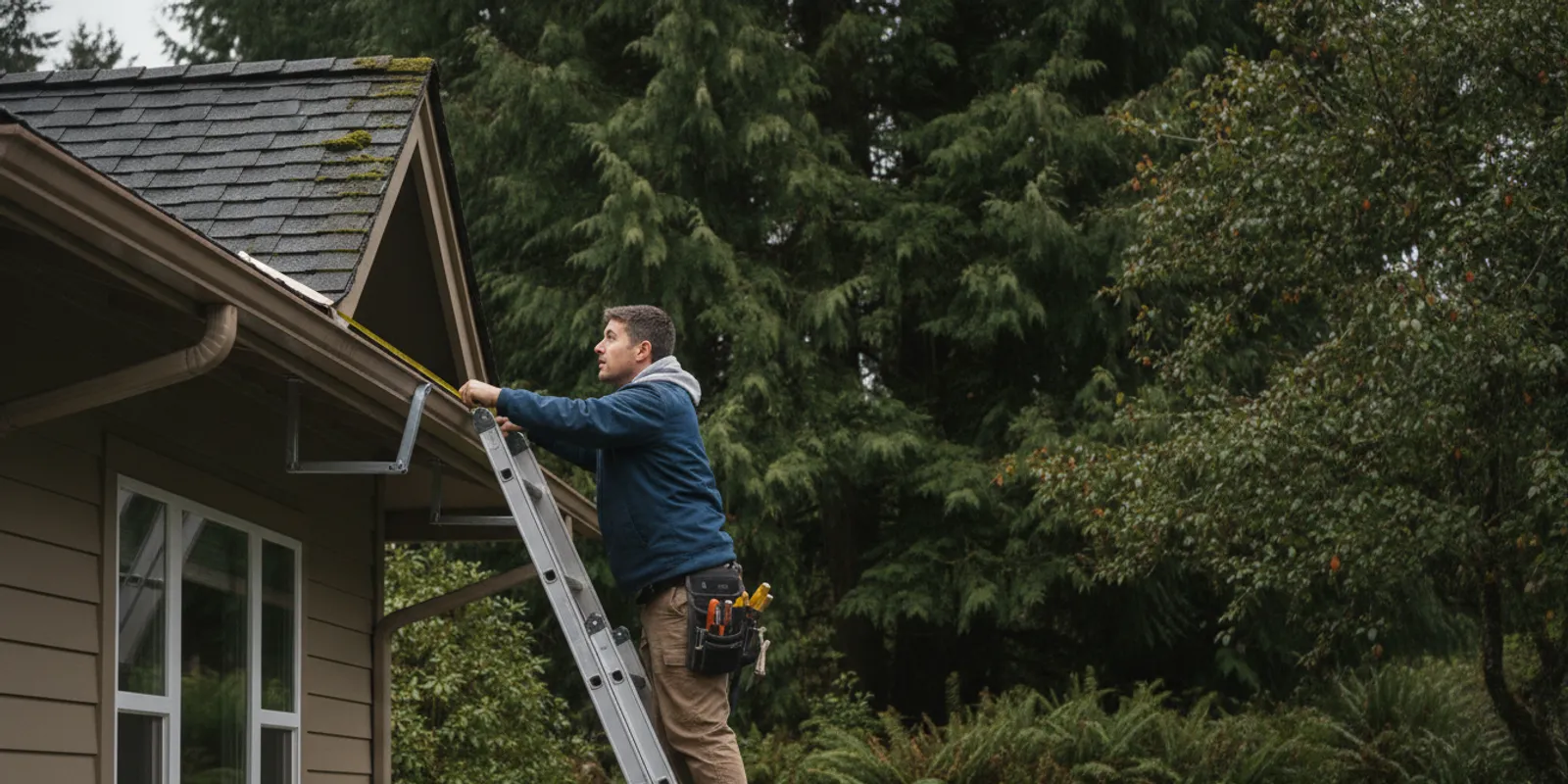
Walk the house once and note what you can see from the ground. Count the downspouts. Look for splash blocks that sit flat, extensions that stop at the flower bed, and corners where two roof planes dump into one short run. You do not need to climb. If a section is hidden by a deck or a steep pitch, say so in the request so each company prices the same access.
If the roof itself is the reason you are calling, say that too. A gutter crew and a roofing crew may need to work the same edge. Residential roofing and gutter work are easier to compare when both scopes are written before either starts.
What to ask gutter installers before they measure
Give every company the same short brief. Ask them to measure the same runs, name the material and size, and say whether they will remove the old system. Ask who will be on site, and whether the price includes hangers, corners, outlets, and downspout extensions. A phone quote based on a satellite photo is a starting point, not a bid you can compare.
Use the same question list with each visit:
What is the legal business name and Oregon CCB license number on this proposal?
Will your employees do the work, or will a subcontractor?
Which runs are included, and which runs are excluded?
What gutter size and profile are you recommending, and why?
Where will each downspout discharge, and how far from the foundation?
What happens if the fascia or roof edge is too soft to hold hangers?
Is old-gutter removal, haul-away, and site cleanup in the price?
What written warranty covers workmanship, and what does the material warranty cover?
The Oregon Construction Contractors Board says the most accurate license search uses the contractor's license number, which must appear in advertising. Look up the legal name yourself on the Oregon CCB license search. Check that the name on the estimate matches the name on the license. A license and an insurance certificate answer different questions. Ask for current liability and workers' compensation documents before you treat two bids as equal.
SA Roofing is licensed, bonded, and insured in Oregon and Washington under OR# 152050 and WA# CLEARCW923BW, and its installers are direct employees. Treat that as one data point. Still read the written scope the same way you would read anyone else's.
Compare scope, size, and material on one sheet
A fair comparison uses the same house and the same assumptions. Seamless aluminum is common in the Portland metro because a long run can be formed on site with fewer joints. Five-inch and six-inch K-style are the sizes most homes are quoted. Do not treat a 5-inch bid and a 6-inch bid as the same job just because both say "gutters.
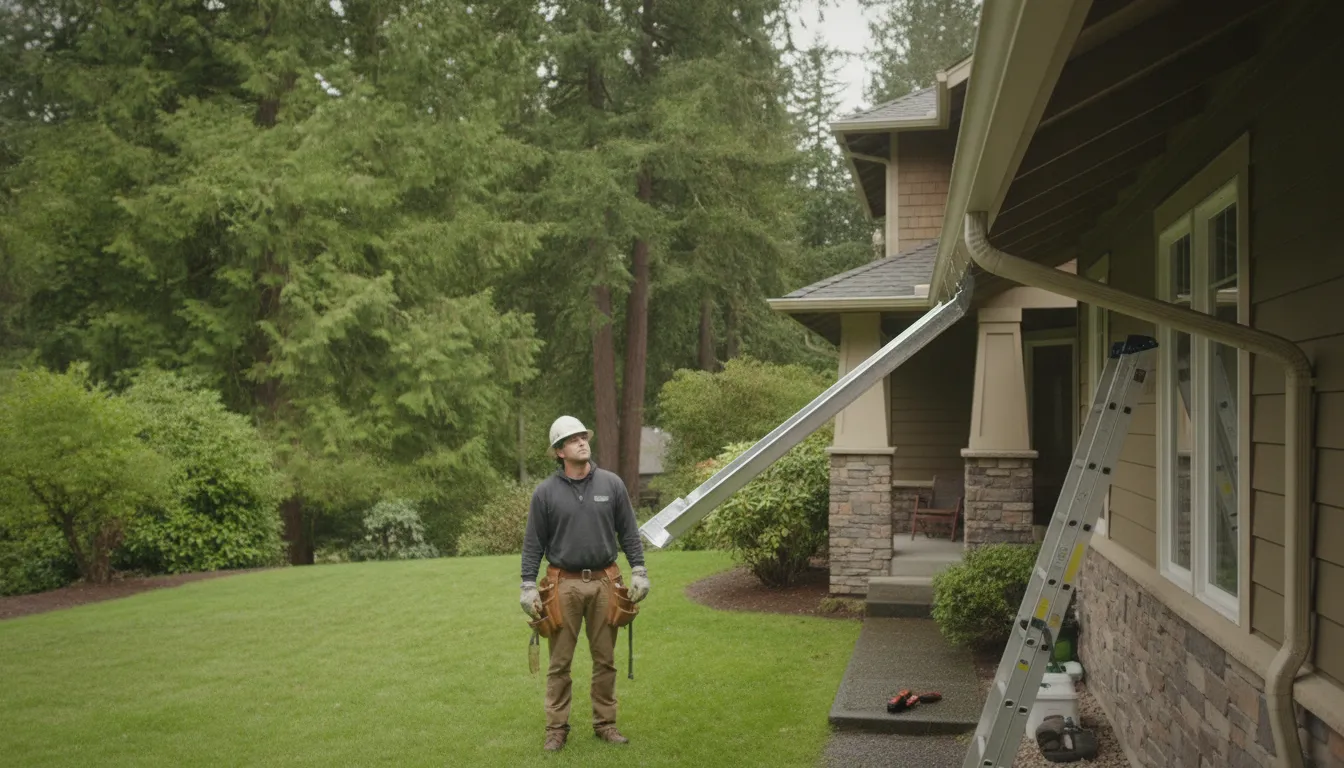
Hangers matter as much as the metal. Hidden hangers screwed into solid framing hold a wet gutter better than spikes driven only into the face of old fascia. Outlet location matters too. A beautiful trough that dumps at the porch step still soaks the foundation. If one bid includes extensions to 5 feet and another stops at the wall, they are not the same drainage plan.
Comparison point | What a complete bid shows | What makes bids hard to compare |
Runs included. | Each eave, with linear feet and any excluded side. | Whole house, with no footage or a missing rear run. |
Size and profile. | Five-inch or six-inch, K-style or another named profile. | Material named, size left blank. |
Downspouts. | Count, location, and where water lands. | Downspouts listed as as-needed. |
Attachment. | Hanger type and what they fasten into. | No mention of fascia condition. |
Removal and cleanup. | Old gutter haul-away and site cleanup included or priced apart. | Removal left as a possible extra. |
Edge repairs. | A unit price or a stop-and-call rule if wood is soft. | A verbal promise to take care of it. |
Warranty. | Workmanship term in writing, separate from the metal warranty. | Lifetime, with no statement of who honors it. |
SA Roofing's gutter service page describes 5-inch and 6-inch seamless K-style systems formed for the house. Use that as the product menu, then make each bidder put the chosen size on paper. Color, end caps, and miters should be on that same page so a low bid is not quietly omitting corners.
Covers and downspout debris catchers are optional. They are not a substitute for slope and outlets. If one company folds a cover into the base price and another prices it as an add-on, split that line out before you rank the numbers. The gutter comparison is about moving water. A cover is a maintenance choice you can decide after the drainage plan is clear.
Read the roof edge before you lock the price
Gutters hang from the edge of the roof. If the fascia is soft, punky, or pulling away, new hangers will not hold just because the metal is new. A careful installer should be willing to stop and show you that wood before they cover it. That pause is a feature, not a delay tactic.
Ask for a written rule. A good rule says the crew will not bury rotten wood, and it names either a per-foot allowance or a call before any fascia or drip-edge work is added. You should not discover an open-ended "carpentry as needed" line after the gutter is already off.
Keep the topics separate in your own notes. Roof fascia signs during a roofing project covers what to look for at the edge. The fascia repair guide covers repair versus replacement. This article only needs the handoff: if the edge cannot hold a gutter, the gutter bid is incomplete until that condition is priced or excluded.
The same logic applies when shingles, underlayment, or drip edge at the eave are already failing. Water that gets behind the gutter is a roof-edge problem. A gutter-only crew should say so instead of sealing over it. If you are also planning shingle work, put both scopes on the calendar so the edge is built once.
How gutter installers should explain the estimate
You are not shopping a single dollar figure. You are shopping a scope you can audit. Line items that should survive a side-by-side read include linear feet, gutter size, downspout count, hanger style, removal, disposal, and the discharge plan. Tax, permit needs if any, and the payment schedule belong on the same document.
Watch for bids that win by leaving work out. A lower price that skips the back slope, uses fewer downspouts, or ends the pipe at the foundation is not a better deal. It is a different project. Ask each company to revise the thin bid so it matches the complete one, then compare again.
Price drivers such as home size, material, pitch, access, and fascia condition are covered in the gutter replacement estimate guide. Repeated overflow and what it can mean for price is covered in the gutter prices and overflow guide. Use those pages when you need the cost story. Use this page to decide whether two installers described the same work.
For the roof portion of a combined project, the roof estimate questions are a separate checklist. Do not let a gutter allowance get buried inside a roof total with no footage. If financing is part of the decision, read financing options on their own and keep the workmanship comparison independent of the monthly payment.
Judge workmanship, crew, and cleanup
Workmanship shows up in small details. Gutters need a consistent slope toward each outlet. Seams and end caps should be sealed, corners should not twist, and downspouts should be fastened so they do not flap in a storm. Hangers should be spaced tightly enough for a full gutter, which is heavy. Ask what spacing the company uses and what they fasten into.
Ask who will be on the ladders. A company that uses its own employees can tell you how the crew is supervised. A bid that says "our installer" but cannot name whether that person is an employee or a subcontractor is hard to evaluate. The same question belongs on a roofing bid. The guide to choosing a roofing contractor covers license, insurance, and crew questions for the roof itself. Do not copy that article onto the gutter bid and assume the scopes match.
Cleanup is part of the job. Old gutter sections, spikes, and sealant tubes should leave with the crew. Ask how they protect siding, plants, and the driveway, and what "complete" means at the walkthrough. A written workmanship warranty should say how long labor is covered and how you request a callback. A manufacturer's finish warranty does not replace that.
Photos of past work help only when they show the edge, the outlets, and the ground-level discharge, not only a pretty front elevation. If you want to see finished projects, project photos are a starting point. Ask which of those jobs included gutters tied to a roof replacement, because that is the combined scope many Portland homeowners actually buy.
A simple way to choose without rushing
Use this order when the bids are in front of you. Do not sign on the first visit.
- Shortlist two or three licensed companies.
Look up each Oregon number yourself before you book the visit.
- Give every company the same brief.
Same runs, same overflow spots, and the same note about any soft fascia.
- Throw out any bid that skips the basics.
Size, footage, downspouts, and the discharge point all have to be named.
- Rank scope match first and price second.
A modest gap is normal. A huge gap usually means something was left out.
- Slow down on pressure.
High-pressure timing, a cash-only demand, or a missing license number is a reason to keep looking. One odd detail is not proof of a problem. Several together are.
When the written scopes match and you still want a second set of eyes on the roof edge, ask for a site visit rather than another phone estimate. SA Roofing's quote visit is meant to be low pressure. You can contact the team with the runs you care about, or start from the residential roofing overview if the roof and the gutters are one project.
Bring your notes to that visit: downspout count, any side that overflows, and whether you already know the fascia is soft. The person measuring should be able to repeat those points back in the proposal. If they cannot, you do not yet have a bid you can compare.
When the scopes match, schedule a no-pressure gutter and roof quote and bring the written bids with you.
Frequently asked questions
How many gutter installers should I compare?
Two or three written bids are enough if each one measures the same runs and lists size, downspouts, removal, and where the water lands. More bids do not help if they describe different work.
Is the cheapest gutter bid the better one?
Not by itself. Check footage, gutter size, hanger type, and discharge distance first. A lower price that stops the downspout at the foundation is a different job, not a discount on the same job.
Should gutter installers also look at the roof edge?
Yes. Gutters only work if the fascia and drip edge can hold them and shed water into the trough. Ask for a stop-and-show rule if the wood is soft, and keep fascia repair as its own priced line.
Do I need a separate drainage plan from the gutter price?
The drainage plan should be inside the gutter price. Each downspout needs an end point far enough from the foundation to keep soil from staying saturated. Extensions, buried pipe, or a planned overflow belong on the bid.
Can I compare a gutter installer and a roofing contractor on one project?
Yes, if both scopes are written separately. Ask who hangs the gutters, who repairs the edge, and which warranty covers each part. A single total with no footage is hard to compare later.

Comments