


Roof Fascia During a Roofing Project: Signs to Check

Roof fascia can look acceptable from the yard and still need attention once a roofing crew removes old shingles, edge metal, or gutters. The project-stage warning signs are usually soft or crumbling wood, fasteners that no longer hold, open gaps, staining behind the gutter, or damage that continues into the soffit, roof deck, or rafter ends. Those findings do not automatically mean you need a new roof. They mean the roof edge should be documented and the added work explained before it is approved.
Ready to get started? Call SA Roofing today at (503) 593-9839 or request a free consultation.
This guide is for homeowners who are planning a roof repair or replacement and want to understand a fascia-related scope change. It focuses on what becomes visible during inspection or tear-off, what a contractor should show you, and how to compare a repair recommendation with the condition found.
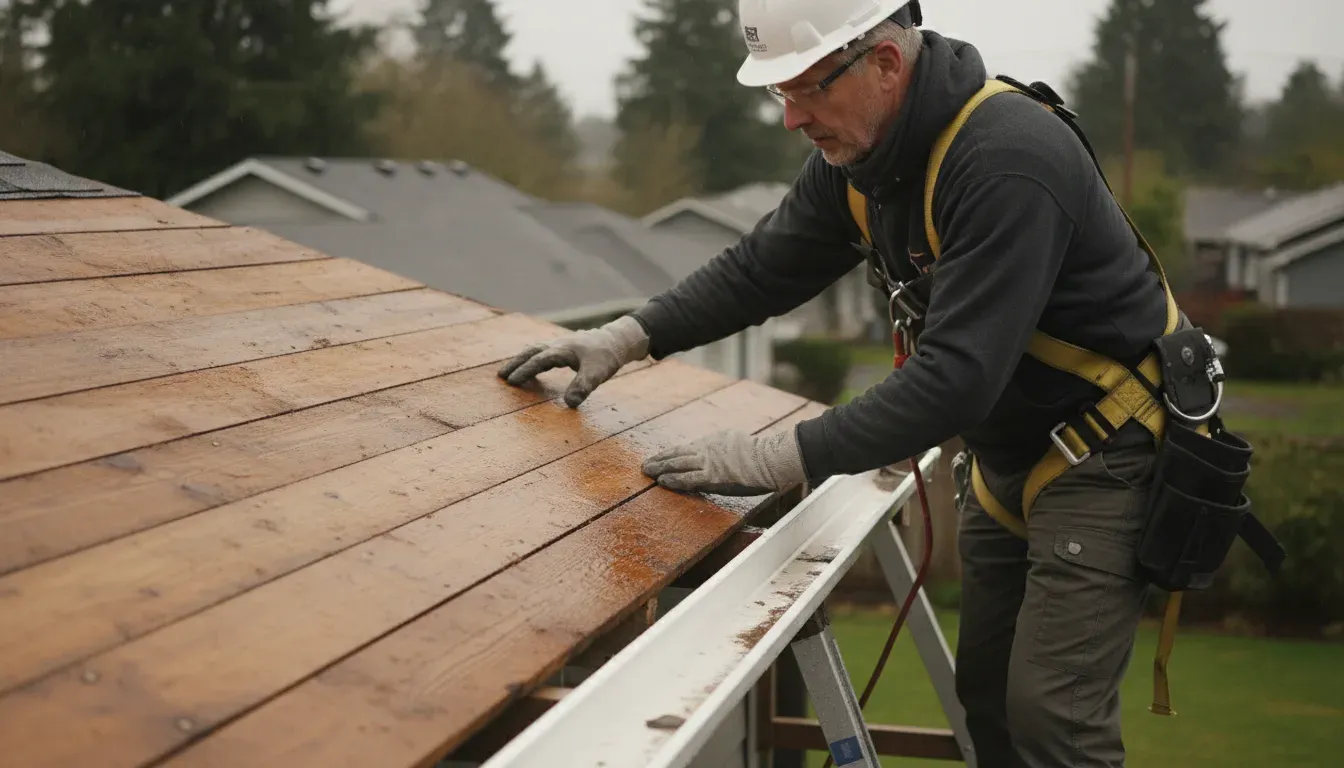
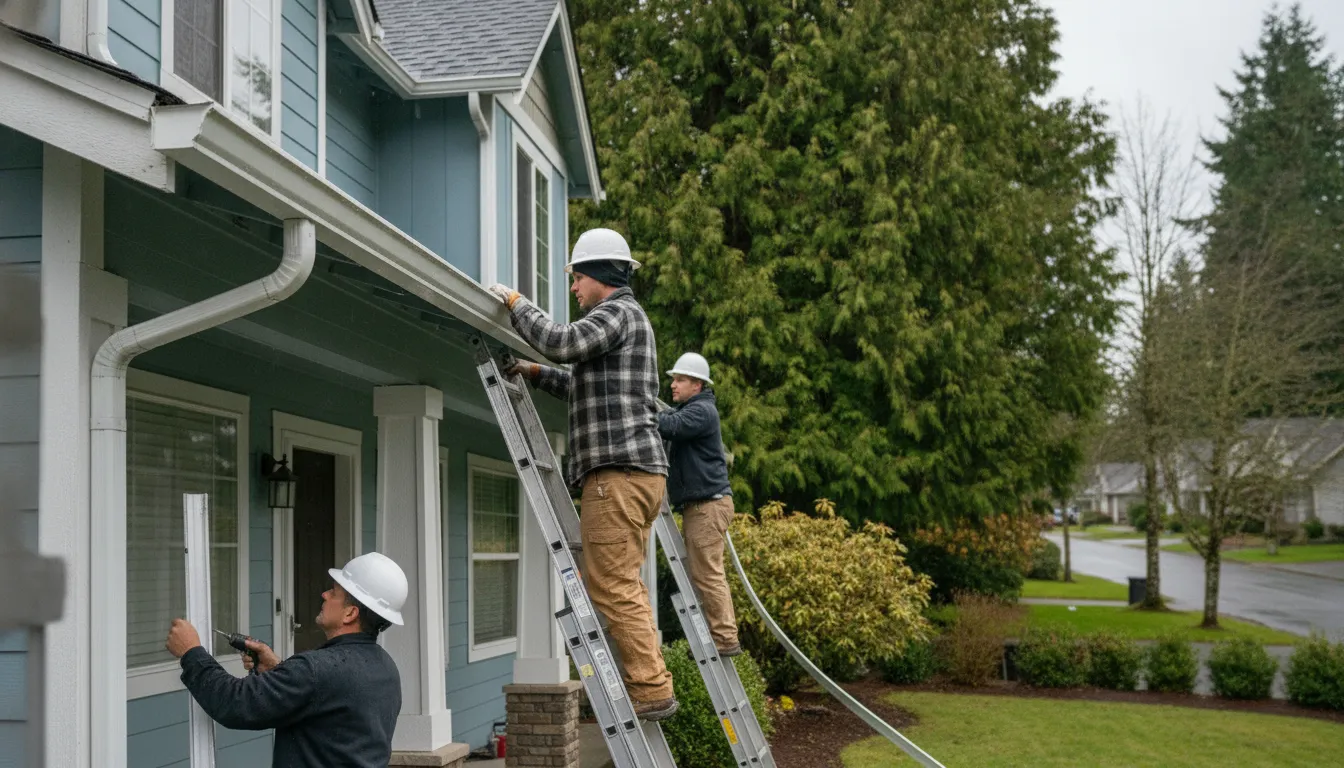
A roof-edge inspection can reveal fascia conditions that are not visible from the ground.
Why a roofing project can reveal fascia roof problems
Fascia is the vertical board along the lower edge of the roof. Gutters are commonly fastened to it, and the board helps close and protect the edge near the soffit and rafters. Its position puts it at the meeting point of roof runoff, gutter drainage, edge flashing, and wind-driven rain.
Before work begins, paint, gutter sections, old shingles, and edge metal can hide the top or back of the board. A visual estimate can therefore describe what is visible without confirming the condition of the concealed wood. Once the crew has safe access and removes the materials in the affected area, the condition may be easier to evaluate.
For a broader explanation of fascia materials, general warning signs, and repair topics, see SA Roofing's fascia roof repair guide. The project-stage questions below are intentionally narrower so you can review a roofing scope without repeating that general guide.
Signs that a fascia roof edge needs attention during the project
Ask the roofer to connect each recommendation to an observable condition. A photo, location, and short explanation are more useful than a line item that only says "fascia work." These are the main findings to discuss.
Soft, crumbly, or hollow wood after materials are removed
Sound wood should remain firm. If the exposed board gives easily, breaks apart, or contains a hollowed-out area, moisture damage may have reduced its ability to hold fasteners. The top edge behind a gutter, the ends near a downspout, corners, and joints can be more affected than the painted face.
Ask whether the softness is limited to a short section or continues behind the visible trim. The answer helps distinguish a localized repair from a longer replacement run. It can also show whether nearby framing or decking needs a closer inspection.
Gutter fasteners that have lost a solid anchor
A gutter that sags or pulls away can be the first visible clue that the fascia behind it has weakened. It can also result from overloaded gutters, poor alignment, or damaged hardware, so the gutter position alone does not prove fascia rot. During the roofing project, ask the crew to identify where the fasteners are anchored and whether that material is sound.
If the gutter is being removed, the scope should say whether it will be reinstalled, replaced, or handled by a separate gutter contractor. The plan should also explain how the finished roof edge will direct water into the gutter instead of behind it.
Staining, wet areas, or failed paint behind the gutter
Dark staining, damp wood, bubbling paint, or repeated peeling can indicate that water has been entering or staying at the roof edge. The visible mark is a clue, not a complete diagnosis. Possible sources include gutter overflow, a leaking joint, a damaged edge detail, or water that has traveled from another roof area.
Ask the roofer to show the likely water path and explain what part of the project will address it. Replacing the board without correcting the source can leave the new material exposed to the same problem.
Open gaps, warped boards, or a roofline that is no longer straight
A gap between the fascia and nearby soffit, roof deck, or edge metal can allow moisture and pests into areas that should be protected. A board that bows, twists, or separates at a joint may have absorbed moisture, lost fastener support, or moved with an adjacent component.
Ask whether the gap is local or continues along the run. Also ask whether the proposed work includes the connected roof-edge detail that caused the opening. This is especially important when the visible gap is near a corner or where several roof planes meet.
Damage that extends into nearby roof-edge components
Once the fascia is exposed, a crew may see damage in the soffit, rafter tails, roof deck, or the wood behind the edge metal. That does not mean every nearby component must be replaced. It does mean those areas should be identified separately, with photos and a clear explanation of whether they are included in the current scope.
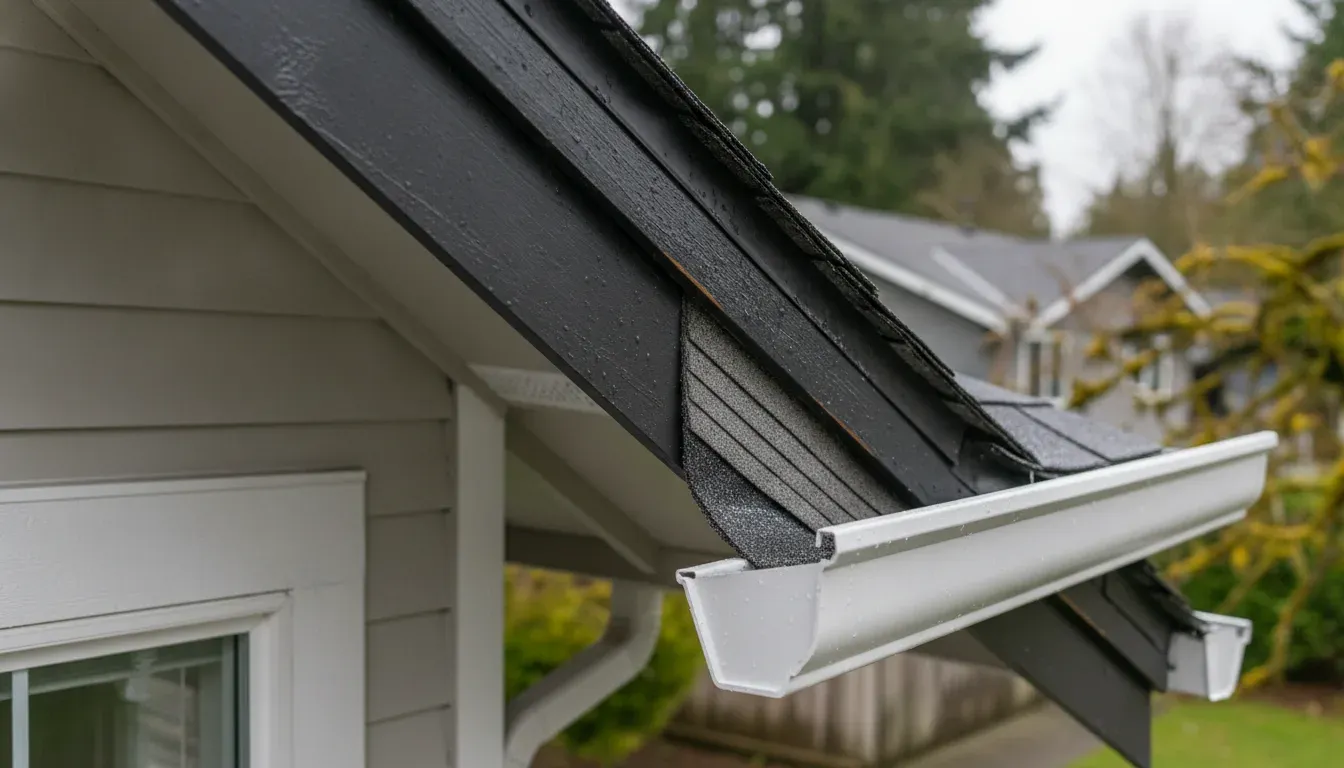
Fascia, soffit, drip edge, and gutters meet at the roof edge and should be reviewed as connected components.
How the roof edge should be reviewed as a connected system
Fascia does not work alone. A useful inspection considers the pieces that transfer or control water at the same edge:
Have questions about a roof-edge finding? SA Roofing can help you compare repair and replacement options with a clear, low-pressure recommendation.
- Gutter attachment:
The fasteners need a firm surface, and the gutter needs the right position and slope for drainage.
- Drip edge and edge metal:
The edge detail should help move runoff away from vulnerable wood and toward the gutter.
- Soffit:
The underside of the overhang may show moisture entry, open joints, or related deterioration.
- Rafter ends and roof deck:
Concealed framing or decking may need inspection if water has reached behind the fascia.
- Roof covering and underlayment:
The replacement sequence should protect the roof edge as the new materials are installed.
Ask the contractor to separate confirmed damage from conditions that are only possible until more material is removed. This keeps the decision clear and avoids treating every roof-edge component as one automatic replacement package.
What should be included in a fascia scope change?
If fascia work was not in the original estimate, request a written change order or updated proposal before approving it. A homeowner-friendly scope should identify:
The location of the affected section, such as a front eave, side run, corner, or downspout area.
The approximate length or number of sections involved.
Whether the work is a localized section repair or replacement of a longer run.
The material and finish proposed for the replacement.
Any gutter removal, storage, replacement, or reattachment included in the work.
Any related soffit, rafter-end, roof-deck, edge-metal, or flashing work.
Photos showing the condition that prompted the added recommendation.
The updated price, expected schedule effect, and assumptions that could change after more material is removed.
The proposal should also explain what happens if concealed damage is discovered beyond the area already documented. A defined approval process helps you make an informed decision instead of feeling rushed while the roof is open.
A quick way to organize the evidence
What the crew finds | What it may mean | What to ask before approval |
Soft or crumbling wood | Moisture may have reduced the board's strength. | How far does the damage extend, and can the fasteners still hold? |
Gutter pulling away | Fasteners may have lost solid wood, or the gutter may be overloaded. | Will the gutter be reattached to sound material? |
Staining or wet wood behind the gutter | Water may be entering, overflowing, or staying at the roof edge. | What is the likely water path, and what corrects it? |
Open gap or warped roofline | Movement, decay, or a related edge detail may be involved. | Is the issue local, or does the scope include the affected run? |
Damage found after tear-off | Old roofing or gutter materials concealed the condition. | Can you provide photos and a written change order? |
How to compare a repair recommendation with the condition found
A localized repair may be reasonable when the damage is limited, surrounding material is firm, and the replacement section can be secured correctly. A longer replacement may be more appropriate when the board is soft across multiple areas, fasteners no longer hold, the run is distorted, or the same moisture path has affected several joints.
The key is to compare the proposed work with the evidence. Ask which section is being removed, how the new material will be supported, how the roof edge will be sealed, and what will happen to the gutter. If nearby framing or decking is affected, ask whether it is part of the scope or a separate condition that still needs evaluation.
Fascia damage by itself does not establish that the entire roof is failing. The broader choice between repair and replacement depends on the roof covering, leaks, age, structure, and other findings. SA Roofing's roof repair and replacement services page provides service context, while its Portland roof replacement guide explains the overall process.
Questions to ask before approving added roof-edge work
Keep the conversation focused on the condition discovered and the work needed to correct it:
What exact sign shows that this fascia section needs attention?
Can you show me photos of the affected area and explain what was hidden before tear-off?
Is the damage limited to the fascia, or does it reach the soffit, rafter ends, roof deck, or edge metal?
How many feet or sections are included in the recommendation?
Will the gutter be removed and reattached, replaced, or handled separately?
What caused the moisture or movement, and what will reduce the chance of repeat damage?
Which parts of the scope are confirmed, and which depend on what is found next?
How will the added work change the total price and schedule?
Can I review the written change order before the crew proceeds?
A clear contractor should be able to answer these questions in plain language. You can take time to review the photos and scope before deciding. A low-pressure estimate is more useful when it gives you enough information to choose the appropriate next step.
Need a clear roof-edge recommendation? Request a free estimate from SA Roofing or call (503) 593-9839 to discuss the condition before approving added work.
Frequently asked questions
Why can a fascia issue appear after a roof estimate?
An estimate may be based on visible conditions before gutters, old shingles, or edge metal are removed. Tear-off can expose concealed wood or connected roof-edge damage that could not be confirmed from the ground.
Should a fascia change order include photos?
Photos are useful because they connect the proposed work to a specific location and condition. Ask for images of the fascia and any related soffit, framing, decking, or edge detail that affects the recommendation.
Does a gutter pulling away prove the fascia is rotted?
No. The gutter may have hardware, alignment, or loading problems. It is a reason to inspect the attachment surface and the roof-edge drainage, not a diagnosis by itself.
Can homeowners inspect exposed fascia during a roofing project?
You can ask the crew to show you photos or a safely accessible view. Do not climb onto the roof or probe an elevated board from an unsafe position. OSHA ladder safety guidance reinforces the importance of using elevated access correctly.
What is the best next step if the proposed fascia scope is unclear?
Ask for the affected location, photos, likely cause, materials, related work, price change, and approval process in writing. If you want a second opinion or a straightforward roof assessment in the Portland metro area, request a free estimate from SA Roofing.
Contact SA Roofing at (503) 593-9839 to discuss fascia, roof-edge, repair, or replacement questions, or fill out the online form for a free estimate.
Comments