


Roofing Services in West Linn Oregon: What Homeowners Ask Before Replacing Their Roof

When you compare roofing services in West Linn Oregon, the first question is often whether your home needs a repair, a replacement, or simply a careful assessment. The right answer depends on the roof’s condition, the source and extent of any damage, and the details of the proposed work—not on pressure to make a quick decision. This guide explains what homeowners can ask, what a useful estimate should show, and how to compare contractors. For related communities and roofing topics, browse our Portland metro roofing guides.
What roofing services are available for West Linn homes?
A residential roofing contractor may help with several different needs. It is useful to distinguish them because a leak or a few damaged shingles do not automatically mean the entire roof should be replaced. SA Roofing’s residential work includes roof replacement, repairs, inspections, and flat roofing systems. Learn more about the company’s roofing services or its residential roofing work.
- Roof inspection or assessment:
A roofer looks at the roof surface and relevant details to identify visible wear, damage, or areas that may need attention. Ask what was inspected and what the findings mean.
- Roof repair:
A repair addresses a specific problem when the surrounding roof is in suitable condition for a targeted fix. The contractor should explain the location and cause they believe the repair will address.
- Roof replacement:
Replacement is considered when the roof’s overall condition, repeated problems, or the scope of deterioration makes a localized repair an unsuitable long-term answer. The estimate should define what is removed and installed.
- Flat roofing:
Some homes or additions have low-slope or flat sections that require an appropriate roofing system and installation details. Ask how the proposed system suits that particular section.
These categories are not interchangeable. A useful consultation starts by understanding the roof and your concern, then explains the options in plain language. If a contractor recommends replacement, ask what evidence supports that scope and whether a repair is a reasonable alternative. If the recommendation is a repair, ask what it can and cannot solve.
What roof concerns should West Linn homeowners look into?
Homeowners may first notice a roof problem from inside the house: a water mark, dampness, peeling paint, or a drip after rain. Outside, they may see lifted or missing shingles, damaged flashing, debris buildup, or a change in the roofline. These observations are useful clues, but they do not always reveal the exact source or how far a problem extends. A visible stain, for example, can show where water appeared inside rather than the precise point where it entered.
West Linn homes vary in age, shape, roof design, and exposure. Rather than assume that one neighborhood-wide condition explains a problem, ask the roofer to connect the inspection findings to your specific house. If your home has steep and low-slope sections, valleys, skylights, chimneys, or roof-to-wall transitions, ask whether those areas were checked as part of the assessment.
After windy or wet weather, a ground-level visual check can help you notice changes, but climbing onto a roof is not a safe way to investigate. Do not walk on a wet, steep, or damaged roof. If water is entering the home, protect belongings where practical and contact a qualified roofing professional to discuss a safe next step. For general leak-response ideas, see our guide to roof repair and leak response.
Ask the contractor to distinguish between an urgent condition that needs prompt attention and work that can be planned after you compare options. Clear communication helps you prioritize without turning an inspection into a sales deadline.
How can you tell whether a roof needs repair or replacement?
There is no single visible sign that determines the answer for every home. A small, isolated issue on an otherwise serviceable roof may be a candidate for repair. Widespread wear, recurring leaks, or damage across multiple areas may point toward a larger scope. The roof’s age can be relevant, but age alone is not a complete diagnosis. Installation details, ventilation, maintenance, and the condition of the materials also matter.
Ask for the reasoning behind the recommendation, not just the label. A roofer should be able to describe the affected locations, what they observed, and how the proposed work addresses them. If replacement is recommended, ask whether there are repair options and what limitations or risks those options carry. If repair is recommended, ask what signs would prompt a later reassessment.
Our homeowner guide to choosing between roof repair and replacement offers more questions to help you frame that conversation. The goal is not to diagnose a roof from a checklist; it is to understand what the professional found and make an informed decision for your home.
Option | When it may fit | What to ask |
Inspection or assessment | You have a concern, visible change, or need a clearer picture before choosing work. | Which areas were inspected, what did you find, and what needs attention now? |
Targeted repair | The issue appears limited and the surrounding roof can support a localized fix. | What specific condition does the repair address, and what is outside its scope? |
Roof replacement | Condition or damage affects enough of the roof that a repair may not be an appropriate overall solution. | What will be removed and installed, and how did you determine this scope? |
Separate system for a low-slope section | A home or addition includes a flat or low-slope roof area. | What system is proposed for this section, and how will transitions be handled? |
This table is a starting point for discussion, not a substitute for an on-site evaluation. Two roofs that look similar from the street may have different underlying conditions. A contractor should explain how the proposed work relates to your roof rather than treat a general rule as a final answer.
What should you look for in a West Linn roofing contractor?
Look for clear answers, a defined scope, and a communication style that lets you make a decision without being rushed. Confirm that the contractor is properly licensed, bonded, and insured for the work and location. SA Roofing is licensed, bonded, and insured in Oregon and Washington; its identifiers are OR# 152050 and WA# CLEARCW923BW. Homeowners can also compare written proposals and ask how questions will be handled during the project.
A contractor’s estimate should make it possible to understand the work being proposed. Check whether the document identifies the roof areas included, the general work sequence, materials or system being proposed, and any relevant exclusions or conditions. Ask who performs the installation and who you should contact if an issue or question comes up. SA Roofing uses direct-employee installers rather than subcontractors; if this matters to you, ask any contractor to explain its crew arrangement and how responsibility is managed.
Our guide on choosing a roofing contractor and this overview of what to consider when hiring a roofing service can help you prepare questions. You can also review items to look for in a roofing proposal before comparing bids.
Pay attention to whether the contractor explains what is known and what still needs confirmation. A professional conversation should leave room for follow-up questions. Be cautious of a proposal that is difficult to understand, does not define its scope, or makes broad promises without explaining what is covered. The purpose of comparing estimates is not simply to select the lowest number; it is to compare what each contractor says they will do and the support they provide.
What affects roof replacement cost in West Linn?
There is no reliable universal price for a West Linn roof based only on a home’s address or square footage. The cost of a specific project depends on its actual conditions and scope. Factors can include the roof’s size and shape, pitch, existing layers and tear-off needs, access, material selection, low-slope sections, flashing and other details, and any work needed after the old roofing is removed.
Because those details vary, an online range or a neighbor’s invoice is not a substitute for a written estimate for your property. Ask each contractor to explain what is included and whether any conditions could change the work after removal. If estimates differ, compare the scope line by line. A lower total may reflect a different material, omitted work, or a narrower scope, while a higher total should also be explained clearly.
SA Roofing has a limited asphalt-roofing planning reference of $10,000–$20,000. It is only a planning reference, not a universal quote or a price guarantee for a West Linn home. The actual estimate depends on the home and the work required. For more context on estimate factors, review our roof replacement cost guide and our explanation of the roof replacement process.
Financing may also be a consideration for some homeowners. Ask about the terms and eligibility directly before making a decision; do not assume that a particular option applies to every project. SA Roofing provides information about its available options on its financing page.
How should you compare roofing materials and proposals?
Material selection is more than choosing a color. The roof’s slope, shape, existing construction, and the manufacturer’s installation requirements all affect which options are appropriate. Ask the contractor to identify the specific product or system in the proposal, explain why it is suitable for the areas being covered, and point out any differences between the alternatives. If two bids use different products or include different layers and details, they are not directly comparable just because both say “new roof.”
Look for enough detail to understand how the roof will be assembled and where important transitions will be addressed. Ask how valleys, edges, penetrations, and connections to walls will be handled as part of the scope. The proposal should also make clear what is not included, such as work that could only be assessed after removal. If a technical term is unfamiliar, ask for a plain-language explanation; you should not have to guess what a line item means.
Warranty language also deserves a careful read. Separate product coverage from workmanship coverage, and ask who provides each warranty, what conditions apply, and how a claim would be made. Coverage and exclusions vary, so do not rely on a verbal shorthand or assume that similarly named warranties offer the same protection. A written answer helps you compare proposals and keep expectations clear.
These questions do not require you to become a roofing expert. They help you see whether the proposal fits your home and whether the contractor can explain the work in a straightforward way. Make a short list of any differences you cannot resolve and ask each contractor to address those points before you decide.
Could design requirements affect roofing choices?
Before selecting a roofing profile or color, check whether your property has any applicable design review, neighborhood, or project requirements. Requirements can depend on the property and the scope of work, so homeowners should confirm details with the relevant local authority or association rather than assume that a material is automatically allowed or prohibited.
A West Linn planning staff report describes an architectural roofing option as similar in appearance to slate and notes multiple color options. That example illustrates why appearance and material selection can be part of a roofing discussion; it does not establish requirements for every West Linn property. See the West Linn planning staff report and confirm any rules that apply to your address before finalizing a selection.
What happens during a roofing estimate?
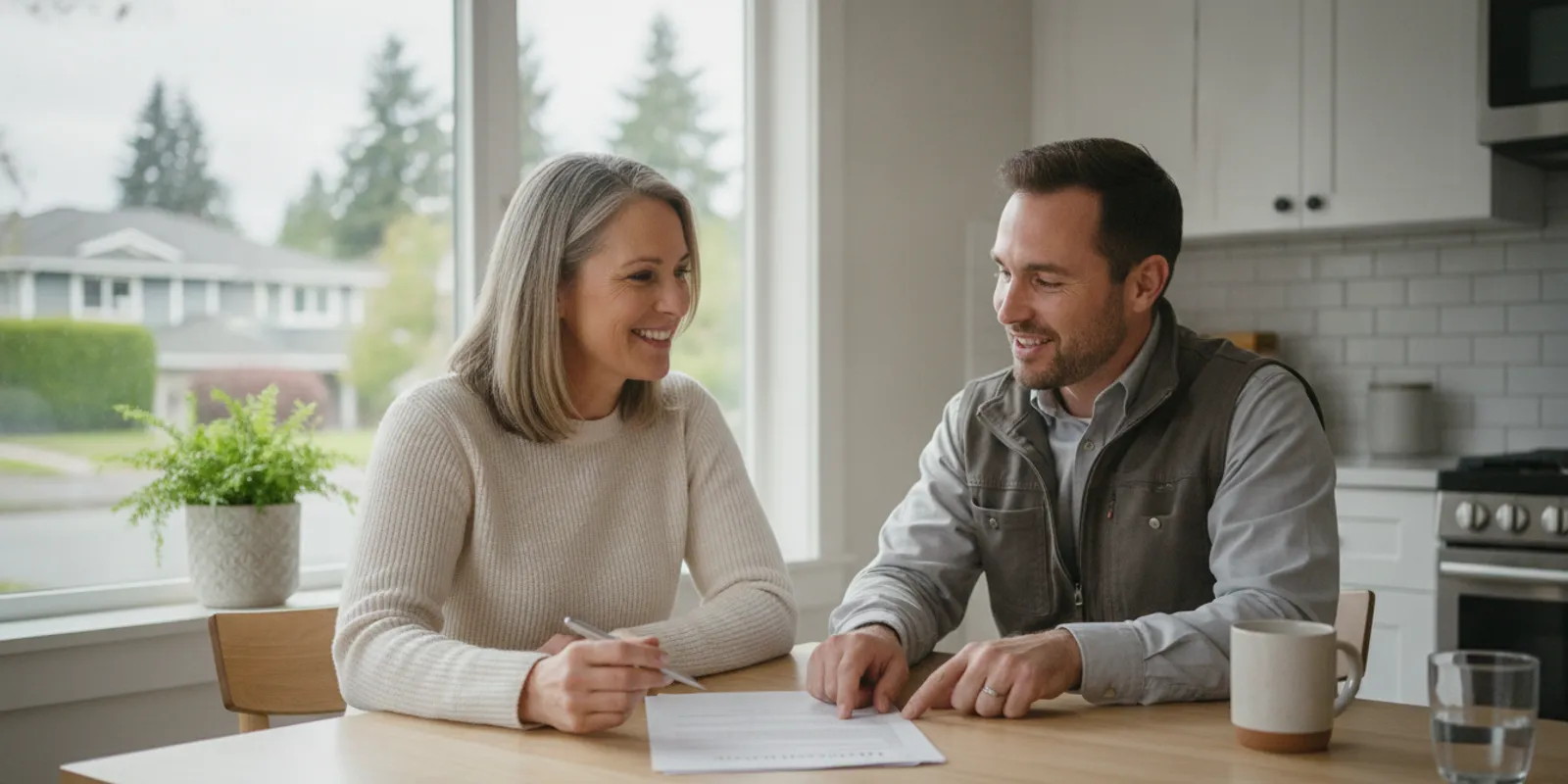
A useful estimate begins with listening to your concern and understanding the home. The roofer assesses the relevant roof areas, explains the observed conditions, and discusses possible next steps. If the roof may need replacement, ask what the project includes and how the crew will communicate about schedule, preparation, and questions. If the recommendation is repair, ask what the repair is intended to resolve and whether any other concerns were observed.
Before the appointment, it helps to note when the issue started, where you noticed it, whether it changes during rain, and any previous repairs you know about. You do not need to climb up and inspect the roof yourself. Photos taken safely from the ground or from inside the home may help explain what you have noticed, but let the roofer assess the roof directly.
During the conversation, consider asking:
What did you observe, and which areas were inspected?
Is the recommendation a repair, replacement, or further assessment? Why?
What exactly is included in the proposed work, and what is excluded?
Which materials or roofing system are proposed, and what alternatives are suitable?
How will you explain any concealed conditions discovered during the work?
Who will be on the installation crew, and who is my contact for questions?
What warranties apply, and where can I review their actual terms?
SA Roofing offers a free roofing estimate. An estimate is an opportunity to understand options and ask questions; requesting one does not obligate you to proceed. For an overview of what to expect, read what happens during a free roofing estimate.
How can you plan for a roof replacement project?
Once you understand the recommended scope, ask what preparation the project requires and how the crew will keep you informed. The details vary by home and project, so a contractor should explain the expected sequence rather than promise a one-size-fits-all schedule. Ask when you will receive a confirmed start date, what could affect it, and how the team will contact you if plans change.
Before work begins, clarify what access the crew needs and whether vehicles should be moved from a driveway or other work area. Ask how outdoor furniture, plants, or other belongings near the house should be handled. If you have pets, children, or household schedules that may be affected by noise or activity, mention them early and ask what to expect. These practical details make it easier to plan without assuming the same arrangements work for every property.
Ask how the contractor will handle unexpected conditions that cannot be confirmed until existing materials are removed. A clear process should explain who will contact you, how the issue and proposed next step will be described, and whether you will have a chance to review any change in scope. You should know how to reach the project contact if you have a question during the work.
After installation, ask what cleanup and final review are included, how to report a concern, and where to find the written warranty terms and care instructions. Warranty coverage varies by product and workmanship agreement, so rely on the actual documents rather than a general phrase such as “lifetime” or “full coverage.” Keep your proposal, change approvals, and warranty documents together for future reference.
Frequently Asked Questions
Does a roof leak always mean I need a full replacement?
No. A leak can come from a localized issue, but the source and the roof’s overall condition need to be assessed. Ask the roofer to explain whether a repair is suitable and what evidence would support a broader scope.
Should I get more than one roofing estimate?
Comparing written estimates can help you understand differences in scope, materials, communication, and project terms. Make sure you are comparing similar work, and ask each contractor to clarify exclusions and assumptions rather than comparing totals alone.
Can I inspect the roof myself before contacting a contractor?
You can note what you see from the ground or inside the home, but do not walk on a roof to investigate. Roofing surfaces can be steep, slippery, or damaged. A qualified professional can assess areas that are not safe for a homeowner to reach.
How do I prepare for an estimate appointment?
Write down your concerns, when you first noticed them, and any previous roof work you know about. Make a list of questions about the recommendation, scope, materials, schedule, communication, and warranty terms. You do not need to diagnose the problem before the visit.
Ready to discuss roofing services in West Linn?
Start with a clear assessment and a written explanation of the options for your home. SA Roofing serves homeowners in the Portland metro area, including West Linn, with a straightforward, low-pressure approach to roof repair and replacement. Take time to compare the scope, ask questions, and choose the next step that makes sense for your home.
A careful conversation can help you understand your roof, compare the work being proposed, and move forward with confidence when you are ready.
Comments