


What homeowners should know: What records should a homeowner keep after arranging roof damage repair

After roof damage repair, keep a clear record of what happened, what a roofing professional observed, what work was approved, and what was completed. This guide explains how to organize photos, recommendations, scopes, invoices, and follow-up notes without promising insurance coverage.
Why keep records after roof damage repair?
A roof project can involve an initial concern, a safe inspection, a written recommendation, an estimate, a repair, and later monitoring. Months later, memory may not show which slope had a problem, what materials were used, or which questions were answered. A project file keeps those details together and gives you a useful history for future maintenance.
Keep dated photos, notes about the first symptom, inspection findings, estimates, approved scope, change records, invoices, payment proof, completion photos, and follow-up observations. Records can help you communicate clearly with a contractor or insurer, but they do not establish coverage. Your insurance policy and insurance provider determine whether a loss is covered.
Think of the file as a timeline, not just a pile of receipts. Start with the first sign of trouble, then add each inspection, decision, approval, and completed task in order. A timeline helps you distinguish the original condition from anything noticed later. It also makes it easier to answer practical questions such as when a stain appeared, whether temporary protection was used, and what was agreed before work began.
What should you photograph first?
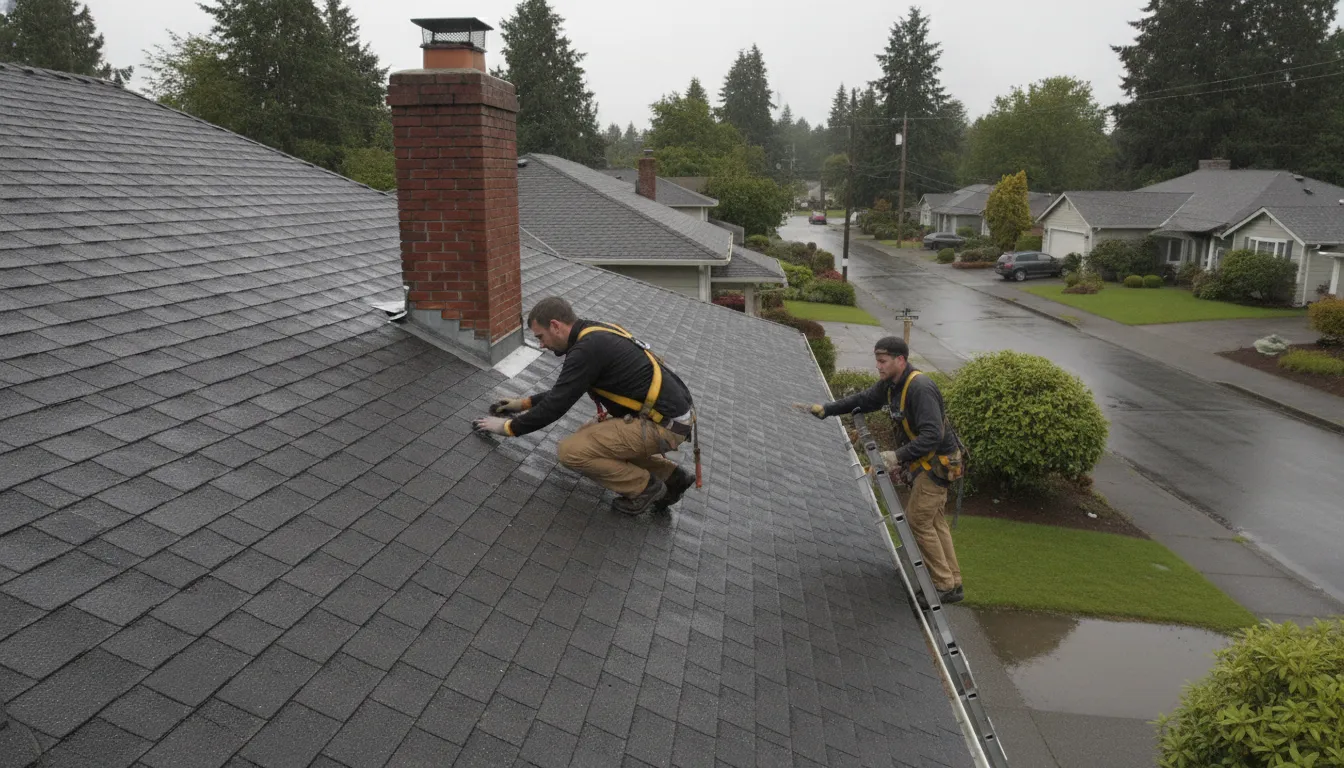
If it is safe, photograph the home from the ground before work begins. Take wide views and closer views of visible damage. Do not climb onto a wet, steep, unstable, or damaged roof. A ground-level photo or professional inspection is safer than taking a risk. Photograph interior stains, damp drywall, damaged trim, and affected belongings as well.
Keep original files and note the date, location, and what each image shows. A note such as “water stain below the north roof slope” is more useful than a generic file name. Separate observations from conclusions. “A stain appeared after rain” is an observation; “the vent caused the leak” requires an evaluation.
Use a repeatable method. Begin with a wide image that shows where the issue is in the room or on the exterior. Then take closer views that show the condition without moving or altering materials. Include a familiar reference point when it helps establish scale, but do not place objects on damaged roofing or disturb a suspected leak path. For interior damage, take one image of the full room and additional images of the affected ceiling, wall, flooring, or belongings.
Preserve the original image files and avoid editing them to add arrows or labels. If you need to point something out, make a separate copy or add a note in a log. Save the original date metadata when possible. File names can add context, for example “2026-10-12-living-room-ceiling-stain-wide” and “2026-10-12-living-room-ceiling-stain-close.” This keeps a useful record even if photos are later moved to another folder.
After any temporary protection or repair, photograph the area again from a safe location. A before-and-after sequence can show what changed and when. Do not delay an urgent safety measure merely to get a photo, and do not enter an unsafe area to document it. If conditions are changing quickly, write down what you could not photograph and why.
Which inspection details belong in the file?
Save a written inspection summary when one is provided. It should identify areas reviewed, visible conditions, areas that could not be assessed, recommended action, and important limitations. Ask for plain-language explanations of unfamiliar terms. If the discussion happens by phone or in person, make a dated note afterward and ask the professional to confirm important recommendations in writing.
Inspection date and company name.
Roof areas reviewed and inaccessible areas.
Observed damage and possible water-entry points.
Temporary protection or safety recommendations.
Recommendation for repair, monitoring, or replacement discussion.
Photos, diagrams, questions, and answers.
Record both what the inspector saw and what could not be confirmed. A roof inspection may be limited by weather, access, visibility, or the condition of materials. A note about a limitation prevents a later reader from assuming that every part of the roof was assessed. If a concern remains, document the suggested next step and any conditions that would prompt a follow-up.
Keep names and contact details with the report, along with the date it was received. If you receive a revised report or additional photographs later, retain both versions and label them clearly rather than replacing the first copy. This preserves the sequence of information and makes it easier to understand why a recommendation changed.
What should a repair scope include?
Keep the proposal or written scope before work begins. It should identify the address, roof area, repair method, materials, preparation, related components, protection, cleanup, exclusions, schedule, price, payment terms, and communication steps. Ask what happens if concealed damage is found. A clear scope prevents you from having to guess what “repair roof” means.
Keep estimates from companies you did not hire, too. When comparing them, compare scope rather than totals alone. One estimate may include preparation or related components that another excludes. If the project changes, save the written change order, revised price, email, or text, and note who approved it and when.
Before approving work, check that the document connects the proposed activity to the location and condition you discussed. “Repair roof” is too broad to serve as a useful record. Ask which roof section is involved, what will be removed or retained, what materials will be installed, and whether nearby flashing or other components are included. If a detail is not known until the work area is opened, the scope should explain how the contractor will document that discovery and seek approval for a change.
Keep a copy of the version you approved. If the estimate is revised, do not discard the earlier version; label the files “initial proposal” and “approved revision,” then note the date of approval. A short written record of a conversation can help, but for changes to the work, price, or timing, request a clear written update before additional work proceeds. Save the response with the project file.
Compare proposals line by line where possible. Note whether each includes access and setup, removal and disposal, repair materials, protection for the home, cleanup, and any follow-up visit. Differences do not automatically mean one proposal is better. They do give you specific questions to ask so you can compare the actual work rather than relying on a bottom-line figure alone. SA Roofing’s proposal guide and roof repair cost guide offer additional context.
Which invoices and warranty documents should you save?
Keep the signed proposal, approved changes, final invoice, receipts, payment proof, material information, manufacturer documents, workmanship terms, permits when applicable, and completion photos. Do not assume a warranty covers every condition. Read the actual terms and ask which company handles each question.
Separate estimates from invoices. An estimate describes proposed work and may change; an invoice records charges for work performed. Match the final invoice to the approved scope and any written changes. If a payment is made in stages, keep each receipt or confirmation and note the date and method. A simple ledger can list the document, amount shown, payment date, and remaining balance, without sharing sensitive account details more widely than needed.
Store warranty paperwork alongside the project, but note the issuer, covered work or materials, term as written, exclusions, and steps for making a request. Do not summarize a warranty as broader than its language. Keep any care instructions and records of maintenance that may be relevant. SA Roofing’s warranty guide explains why details matter. General information about underlayment and roof venting can help you follow project discussions, but the project documents remain the record of what was actually installed.
If a permit, inspection, or other local record applies to the project, save the related paperwork and final status. Do not assume every repair has the same requirements; ask the contractor or appropriate local authority what applies to your situation. Keeping those documents in one place can help answer questions if you sell the home or arrange later work.
How should you record follow-up?
After completion, compare the finished work with the approved scope. Take safe ground-level photos, save contractor completion photos, record the completion date, and write down care or monitoring instructions. Keep a short log with the date, observation, and action. For example, “checked the repaired area after rain; no interior moisture observed” is useful.
Follow-up notes should stay factual and specific. Write what you saw, where you saw it, the weather or timing if known, and what you did next. “Small damp mark appeared below the upstairs window after heavy rain; photographed and reported” is more useful than “roof failed again.” Avoid assigning a cause until it has been evaluated. That makes it easier for a professional to investigate without being steered by a premature conclusion.
If a new stain, loose material, or concern appears, record it promptly and contact the appropriate professional. Do not cover an unresolved issue with your own patch before understanding the cause. Water can travel from another roof area, and an added patch can hide useful evidence. Review SA Roofing’s repair versus replacement guide when the next step is unclear.
Some follow-up can be as simple as noting a visual check from the ground after a storm or recording a contractor visit. Do not treat routine observation as a substitute for professional assessment when you see active leaking, damaged materials, or a safety concern. Write down whom you contacted and when, the guidance received, and whether another visit or action was planned. If a problem appears resolved, note that observation without claiming it proves the underlying cause is permanently corrected.
How can you organize the records?
Create a digital folder named for the property and project. Use dated file names such as “2026-10-12-completion-photo” and keep a backup. A practical structure is initial condition, inspections, estimates, approved work, payments, completion, and follow-up. Protect financial information and share it only when needed.
You can keep paper copies too, especially for signed documents or records you may need when internet access is unavailable. Use a simple index at the top of the folder: project address, date the concern began, date of inspection, contractor contact, and the names of the main documents. If you scan paper records, check that all pages are legible and saved in the right folder. Store the paper original somewhere dry and easy to retrieve.
Choose one naming convention and use it consistently. Put dates in year-month-day order so files sort chronologically. Use short descriptions rather than long narratives in file names; put the fuller explanation in a separate timeline or note. Keep a backup in a separate location from the primary device, and confirm occasionally that files open. If multiple household members are involved, agree on one shared folder and one place for new documents so duplicate versions do not create confusion.
Keep private information limited. A project folder may contain payment records, addresses, or personal details. Share only the documents needed for a specific conversation, and consider removing unrelated account information from copies. Use a secure method for documents when one is available. A well-organized record is useful only if it remains accessible to the people who need it and is not distributed unnecessarily.
The Mississippi Home Corporation recommends keeping home maintenance records to identify patterns and avoid redundant services or unnecessary upgrades. Read its home maintenance records guidance. That principle applies to roof files too: earlier inspection notes can help you understand whether a new concern is in the same place or represents a different issue.
What records should you keep at each stage?
Stage | Records to keep | What they help clarify |
Initial concern | Date, room or roof area, observations, original photos | Establishes what you first noticed |
Inspection | Written findings, areas reviewed, limits, recommendations | Separates observed conditions from assumptions |
Proposal and approval | Estimate, scope, materials, exclusions, written changes | Shows what work was agreed to |
Completion and payment | Final invoice, receipts, payment record, completion photos | Documents work performed and project closeout |
Follow-up | Dated observations, communications, next steps | Creates a usable history for future questions |
A quick review at each transition can prevent gaps. Before work starts, confirm you have the approved scope and a way to record changes. At closeout, check that you received the final invoice, any applicable warranty or material documents, and completion information. When you notice a later concern, add it to the same timeline rather than starting an unconnected file.
What should you ask before the next step?
Ask whether the recommendation is for a focused repair, monitoring, or a broader evaluation. Ask what is included, what is excluded, how changes are approved, how cleanup is handled, and which documents you will receive. A low-pressure conversation should give you room to understand the work before deciding.
Useful questions include: Which roof area did you inspect? What observations support the recommendation? Are there limits to what you could assess? What is included in the written scope, and what is not? If additional damage is uncovered, how will it be documented and approved? What invoice, photos, and care instructions will I receive at completion? These questions make the next discussion concrete without requiring you to decide before you understand the options.
For more background, review SA Roofing’s roof repair and replacement information, residential roofing services, and roof repair guide. If you are comparing options, the roofing service hiring guide and Portland roof repair tips can help you prepare questions. A roofing estimate request is another way to discuss the roof and clarify what information would be useful.
SA Roofing serves homeowners throughout the Portland metro area with residential roof repair and replacement information. You can review its roofing project examples to see the type of residential work presented on the site, then decide whether a conversation would be helpful.
Frequently asked questions
Do records prove insurance coverage?
No. They document conditions and work, while your policy and insurer determine coverage. Keep copies of communications with the insurer if you make a claim, but rely on the policy and the insurer’s written decision for coverage questions.
Should I keep unused estimates?
Yes. They show what was observed and proposed at that time, but keep them separate from the approved scope. Label them as unaccepted so they are not confused with the work you authorized.
What if hidden damage is found?
Ask for photos, an explanation, a revised scope, and written approval before additional work. Save the original scope and the updated document so the reason for the change remains clear.
How long should records stay?
Keep them while you own the home and longer when they relate to payment, permits, warranties, or major improvements. If you are unsure whether a tax, legal, or insurance rule applies, ask an appropriate qualified adviser rather than relying on a general roofing guide.
Organizing roof damage repair records gives you a clearer home history and a calmer way to handle future maintenance, questions, or professional evaluations. Keep the file current as new observations or documents arrive, and use it to support an informed conversation about the next step.


Comments