


What to Expect During Roof Replacement in Portland

What to expect during roof replacement in Portland is a planned homeowner journey: you contact a roofer, review the existing roof and estimate, prepare the property, watch the crew remove and install the roofing system, and finish with cleanup and a final inspection. Knowing the sequence makes a major project easier to evaluate without unnecessary stress. For a broader look at the factors that shape your project budget, see our roof replacement cost and planning guide for Portland homeowners.
The full roof replacement process: an overview
Roof replacement usually moves from an initial conversation to a property-specific assessment, written scope, preparation, removal, installation, cleanup, and final review. The exact order and scope depend on your roof, home, materials, weather, and proposal, but a clear contractor should explain what happens at each handoff before work begins.
- First call:
Share your concerns, roof history, and goals.
- Estimate appointment:
A roofing professional evaluates the property and discusses findings.
- Scope and planning:
Review the recommended system, materials, work area, schedule, and written bid.
- Home preparation:
Protect or move items that could be affected by noise, vibration, or access needs.
- Removal and deck inspection:
The existing roofing is removed and underlying conditions are checked.
- New roof installation:
The agreed roofing system is installed in sequence.
- Cleanup:
Roofing debris and materials are removed from the work area.
- Final inspection:
You walk through the completed work and outstanding questions with the crew lead.
Portland weather can affect scheduling, especially when rain would make roof work unsafe or compromise installation conditions. A responsible contractor should communicate schedule changes rather than rush a weather-sensitive step.
What happens at your free estimate appointment?
At a free estimate appointment, the roofer reviews the roof's condition, listens to your concerns, and explains which work is recommended and why. You should leave with a clearer understanding of the roofing system, the proposed scope, material choices, possible contingencies, and how the project will be managed.
Bring any information that helps the estimator understand the home's history, including:
Previous repair records or invoices, if available
Notes about recurring leaks, staining, drafts, moss, or visible damage
Insurance or inspection documents related to the roof, if applicable
Your priorities for appearance, durability, ventilation, and budget
Questions about the proposal, installation crew, cleanup, and warranty documents
A useful estimate is more than a single total. It should make the work understandable. Ask whether the proposal identifies the roofing material, tear-off assumptions, underlayment, flashing, ventilation, disposal, cleanup, and any conditions that could change the scope. The Portland roof replacement planning guide explains why a property-specific inspection is more useful than a generic online price.
SA Roofing's approach is built around clear recommendations, transparent pricing, and a low-pressure conversation. You should have room to ask questions and compare the scope with your priorities before deciding.
How should you prepare your home for installation day?
Preparing for roof replacement means giving the crew safe access while protecting the parts of your home and yard that matter to you. Move fragile items, clear access routes, secure outdoor belongings, and ask your contractor what to expect from noise, parking, material delivery, and daily cleanup.
- Clear the driveway and access areas:
Make room for the crew, deliveries, and debris removal according to the contractor's instructions.
- Protect fragile items indoors:
Vibration from roof work can move items on shelves or walls, especially on upper floors.
- Secure outdoor belongings:
Move patio furniture, planters, toys, and decorations away from the work area.
- Plan for noise:
Arrange work, school, calls, or pets around the louder portions of the project.
- Confirm access:
Tell the project contact about gates, parking restrictions, alarm systems, pets, or other property details.
- Ask about daily conditions:
Confirm where materials will be placed, how the site will be protected, and what will be cleaned each day.
You do not necessarily need to stay home for the entire project. Ask SA Roofing how communication will work when you are away and who to contact if weather or an unexpected condition changes the plan. If you have questions about restroom access or interior entry, clarify those expectations before installation day rather than assuming every crew follows the same policy.
What does the crew do on your roof, and in what order?
The crew typically protects the work area, removes the agreed existing roofing, checks the exposed roof deck, installs the specified roofing components, and completes the edges, penetrations, and finishing details. Your written scope is the controlling reference, so ask about any step that is not clearly described.
Project stage | What you may see | What to confirm |
Site protection | Ground coverings, designated access, and material staging | Which areas are protected and where materials will be placed |
Roof removal | Existing shingles or other roof covering being taken off | What the proposal assumes about layers and tear-off |
Deck review | Exposed roof deck and inspection for weakened areas | How unexpected decking work will be documented and approved |
System installation | Underlayment, flashing, ventilation components, and new roofing | Which products and installation details are included |
Finishing work | Edges, penetrations, ridges, valleys, and visible details completed | How the completed scope will be checked before closeout |
Portland roofs can include different slopes, valleys, dormers, skylights, and older construction details. Those features affect how the crew works and why an on-site assessment matters. A professional installation should follow the agreed scope and the applicable manufacturer requirements for the selected system.
What happens if the crew finds damaged roof decking?
If removal exposes damaged decking or another condition that was not visible during the initial assessment, the crew should pause that part of the work, document the condition, and explain the recommended correction. You should receive a clear scope and cost discussion before approving work outside the original agreement.
This is one reason to ask how the proposal handles concealed conditions. No inspection can see every surface beneath an existing roof covering. A transparent process separates confirmed work from possible allowances and gives you a chance to understand why a change is needed.
Do not rely on a vague promise that unexpected work will be handled later. Ask who will contact you, what evidence you will receive, and how the revised scope affects the schedule. Clear communication protects both the homeowner and the contractor from confusion.
How is the job site cleaned up after replacement?
Cleanup is part of a complete roof replacement, not an optional final detail. After installation, the crew should remove roofing debris, organize or remove leftover materials according to the plan, check accessible ground areas, and leave the property ready for your final walkthrough.
Ask where debris will be collected and how removal will be coordinated.
Keep children and pets away from the work area until the crew confirms it is safe.
Walk the property with the project contact and point out any concern before the crew leaves.
Ask what happens to unused materials, extra products, or documents that belong with the project.
It is reasonable to ask how the crew checks for stray fasteners and material pieces around driveways, walkways, landscaping, and other accessible areas. Your contractor should also explain whether any follow-up visit is needed for a final detail or weather-related check.
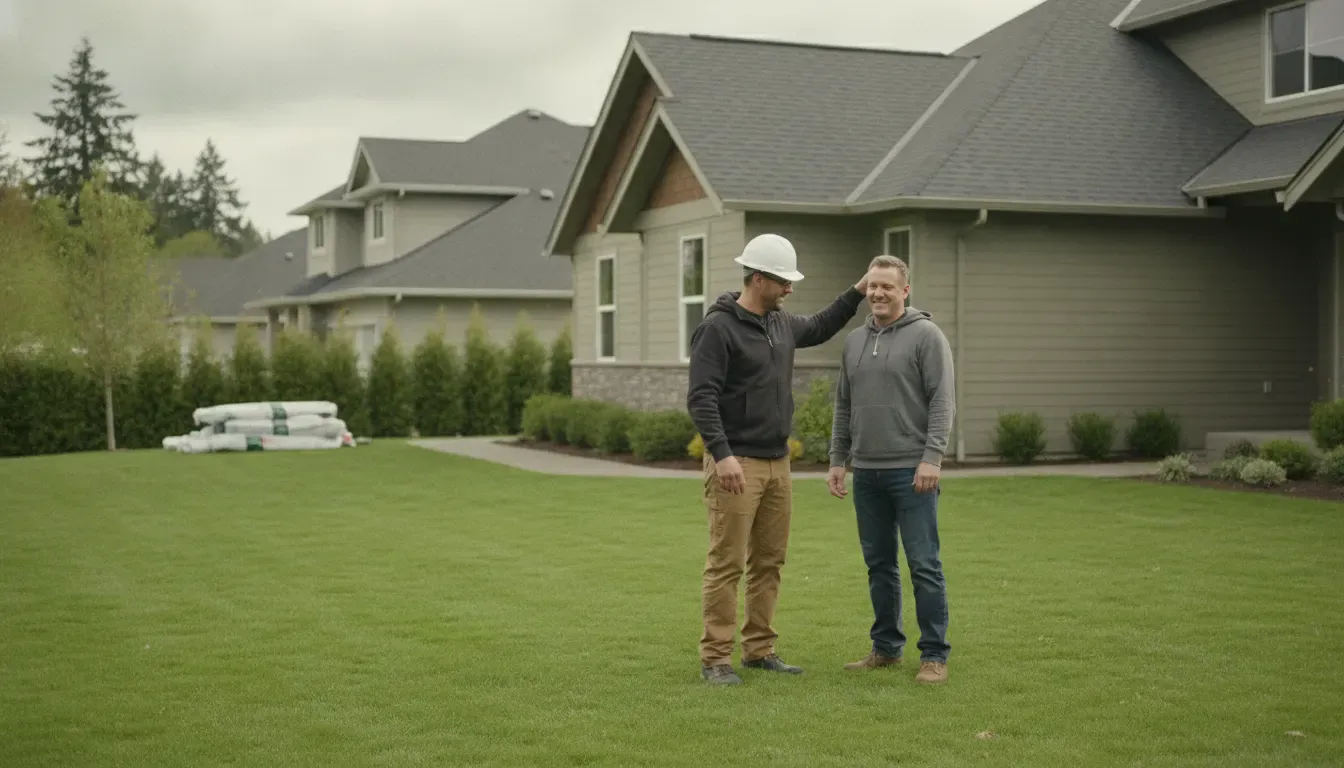
What does the final inspection cover, and what do you receive?
The final inspection is a closeout conversation about the completed roof and the agreed scope. The lead installer or project contact reviews visible work, cleanup, remaining questions, and the documents that apply to your project so you know what was completed and whom to contact later.
Use the walkthrough to ask about:
Whether the installed system matches the proposal and selected materials
Flashing, roof edges, valleys, penetrations, and ventilation details included in the scope
Areas that were repaired or replaced after the roof was opened
Cleanup status and any follow-up work still scheduled
Product and workmanship warranty information that applies to your project
Maintenance recommendations and the best contact for future questions
Do not feel pressured to sign off on a project you do not understand. A straightforward contractor should answer questions, explain any exceptions, and make it clear what happens next. Keep the final documents with your home records.
How long does roof replacement take in Portland?
The length of a roof replacement depends on the home's size and design, the existing roof condition, the selected system, crew planning, and weather. Rather than relying on a generic number of days, ask for a project-specific schedule and how the contractor will communicate changes.
This article focuses on the homeowner experience from first call through final inspection. For a separate discussion of replacement timing and the factors that affect a schedule, read SA Roofing's roof replacement service guide for Portland homes.
Roof replacement questions Portland homeowners often ask
Should I stay home during roof replacement?
Not always. Ask your contractor whether you need to be present for access, material decisions, or the final walkthrough. Before leaving, confirm the communication contact, pet plan, parking instructions, and how unexpected conditions will be approved.
What can go wrong during a roof replacement?
Weather, concealed decking damage, material delays, access issues, and scope misunderstandings can affect a project. A written proposal, documented change process, and responsive project contact make it easier to address those issues without unnecessary confusion.
Will roof replacement be disruptive?
Expect construction noise, foot traffic, material movement, and activity around the home during working hours. Protect fragile items, plan for pets and children, and ask how the crew will protect the property and clean the site.
What should a roofing estimate include?
A useful estimate should explain the recommended system, materials, removal assumptions, likely installation components, cleanup, disposal, schedule expectations, and how concealed conditions are handled. It should give you enough detail to compare scope, not just totals.
How do I choose a Portland roofing contractor?
Look for clear recommendations, a detailed written scope, responsive communication, appropriate licensing and insurance, quality installation practices, and a low-pressure process. Ask who will perform the work, how the site will be protected, and what the final inspection includes.
Roof replacement does not have to feel mysterious. When the estimate, preparation, installation sequence, cleanup, and final inspection are explained in plain language, you can make an informed decision and know what questions to ask along the way. SA Roofing serves homeowners throughout the Portland metro area with straightforward recommendations and responsive communication.


Comments