


Gresham Roof Inspection: Questions After Purchase

After buying a home, a roofing inspection can help you understand the roof’s current condition and decide what needs attention first. In Gresham, a post-purchase review can be useful when transaction documents leave questions, a leak appears, or you want a clearer plan before other exterior updates. The goal is not to assume the roof needs replacement; it is to get observations and options you can evaluate.
Why arrange a roofing inspection after purchase?
A home sale may include roof information, but that information may not answer every question you have after moving in. A pre-purchase home inspection, seller disclosure, repair invoice, or roof certification describes a particular point in time and a particular scope. It may not explain a new stain, clarify the condition of a repair, or help you decide what to do next.
Consider contacting a roofing professional when you notice a ceiling stain or damp area, find records of a past leak, see visible wear, or want to plan maintenance before making other improvements. An evaluation can help you discuss current conditions and possible options. Its scope depends on what you request and agree to before the visit; do not assume every appointment includes a particular checklist, report, or fee arrangement.
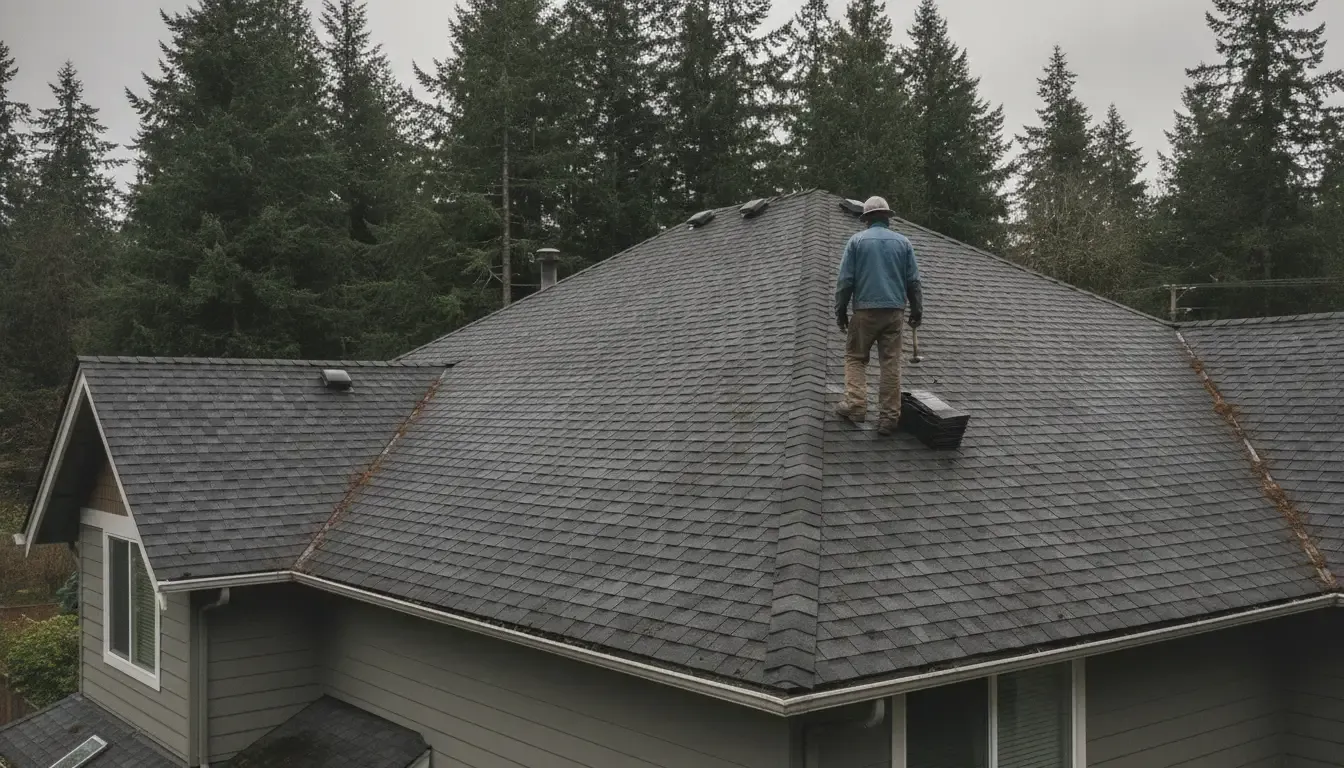
If water is entering the home, note where and when you see it, and protect belongings if you can do so safely. Avoid climbing onto the roof or walking on wet surfaces. For clues you can observe from the ground, review roof damage signs homeowners can spot. A visible symptom indoors may not identify the roof source by itself, so share observations rather than guessing at the cause.
What records and observations should you gather?
Before the visit, collect documents that could explain the roof’s history. Useful items may include the home inspection report, seller disclosures, repair invoices, warranty documents, and photos of any leak or staining. These records do not replace an evaluation, but they give you a starting point for specific questions.
- Write down the location.
Identify the room, ceiling area, or exterior section involved. A simple sketch or photo from a safe location can help distinguish one concern from another.
- Record timing.
Note when you first noticed the issue and whether it changes during or after rain. If a stain grows, take dated photos from the same position.
- Describe what changed.
Say whether the mark is new, whether it feels damp, or whether you have seen water more than once. Separate what you observed from what you suspect.
- Bring relevant paperwork.
Mark the page or invoice that mentions a prior roof repair, concern, or certification so you can find it quickly.
- Set a priority.
Tell the contractor whether you need help with active water entry, an older repair, visible wear, or longer-term planning.
Keep photos and notes focused. A picture of an interior stain, for example, can show its size and location over time, but it cannot establish the leak’s path through the roof assembly. Do not remove roofing materials or enter an unsafe attic to investigate. If you are unsure whether a space is safe to access, leave it for a qualified professional.
What should you confirm before scheduling?
Be clear about the appointment’s purpose before selecting a time. Ask what areas the roofing professional expects to evaluate, whether access limitations could affect the visit, whether any fee applies, and what form of findings or recommendations you should expect. The available information does not establish a standard fee or a fixed report format for a standalone post-purchase residential inspection, so confirm details directly.
Explain whether you want to understand one concern or discuss the roof more broadly. If you have an active leak, say so when you contact the company and describe the room, timing, and any visible effects. Ask whether the proposed appointment is appropriate for the issue you described. You can review SA Roofing’s roofing services and its roofing estimate process as background, then confirm the exact scope with the team.
SA Roofing serves Gresham within its stated core service area. For context on evaluating contractors and comparing your options, see the local guide to Gresham roofing contractors. That guide is a useful starting point, not a substitute for confirming the details of your particular appointment.
What questions help make the findings clear?
You do not need to know roofing terminology to have a useful discussion. Ask for descriptions tied to locations and observed conditions. If a recommendation is unclear, ask the contractor to restate it in everyday language and explain what decision it affects.
What parts of the roof were evaluated, and were any areas inaccessible?
What conditions did you observe, and where are they located?
Is there evidence of active water entry, or is the source still uncertain?
Which items appear to call for maintenance, repair, monitoring, or further evaluation?
What is the practical consequence of waiting on each recommended item?
Can you explain the proposed work, its purpose, and its limits in writing?
What should I monitor, and what change should prompt another call?
Ask the professional to separate direct observations from conclusions and unknowns. For example, “There is a damaged section of flashing by this roof opening” is a specific observation; the cause of an interior stain may still require more investigation. Clarify what the proposed next step would establish, whether it involves additional access or work, and whether that step changes the cost.
How can you compare possible next steps?
An inspection does not automatically mean a roof needs replacement. The appropriate next step depends on the observed condition, its extent, whether water is entering, and your priorities. Use a written comparison to understand what each option addresses, what it leaves unresolved, and what follow-up may be needed.
Possible next step | Questions to ask | Details to clarify |
Monitor or maintain | What specific area should I watch? | Location, visible changes, and a practical follow-up trigger. |
Localized repair | What condition will the repair address? | Repair area, scope, limitations, and written price. |
Further evaluation | What is uncertain, and what would clarify it? | Access needed, additional work, and any associated cost. |
More extensive work | Why is a larger scope recommended? | Observed basis, alternatives, materials, exclusions, and proposal terms. |
For any proposed work, request a written estimate that explains the scope and costs. Ask what is included, what is excluded, and whether concealed conditions could change the work. SA Roofing says its quotes lay out costs and markups; its guide to questions to ask about a roof estimate can help you prepare for that conversation. Compare proposals by scope and assumptions, not only by the total.
If a repair is proposed, ask what problem it is intended to address and what would remain outside the scope. If replacement is recommended, ask why a repair is not considered suitable and what evidence supports the larger project. A clear recommendation should connect to observed conditions rather than relying only on a general statement about age.
How should you weigh records, warranties, and uncertainty?
Paperwork from the sale can be helpful, but read it for its actual scope. A record may identify work completed without describing every roof area, and warranty documents may set conditions that are specific to the product or project. Ask who issued a warranty, what work or materials it covers, whether it transfers to a new owner, and what documentation is required. Do not assume that a past repair or a general roof evaluation guarantees future performance.
When comparing a contractor’s recommendation with older records, make a short timeline: note the date of the prior concern, the repair date, any warranty period shown, and when you noticed current symptoms. This can help identify useful follow-up questions without deciding in advance that the earlier work failed. If two sources seem to conflict, ask each professional to explain the difference in scope or timing.
For a roofing company’s general approach, you can read more about SA Roofing. Any warranty or project terms that matter to your decision should be confirmed in writing for the specific work being considered.
How can you make a practical decision after the visit?
Sort the findings into three groups: items that need prompt attention, items that can be planned, and questions that remain unresolved. For each item, write down the observed location, the recommendation, the reason given, and the next action. This is more useful than keeping a list of roofing terms without knowing what they mean for your home.
For example, if the professional notes an area to monitor but no active water entry, ask what visible change should move it from monitoring to repair and when to revisit it. If a localized repair is proposed, ask what it will correct and what it will not. If a larger project is discussed, request the reasoning and a written scope before deciding. You can take time to compare information and ask follow-up questions; a consultation should support an informed choice, not pressure you into a decision.
If the roof concern overlaps with drainage, ask whether the observed issue involves the roof covering, flashing, or water disposal and whether those are separate scopes. SA Roofing also provides gutter replacement information; ask a contractor to explain any relationship between a gutter concern and the roof findings rather than assuming one service resolves the other.
Frequently asked questions
Should I arrange an evaluation if the home inspection found no major roof issue?
It depends on your current concerns and the scope of the earlier inspection. New symptoms, incomplete records, or questions about a noted repair may be reasons to ask a roofing professional whether another evaluation would help.
Does buying a home mean the roof needs replacement?
No. A purchase alone does not establish that replacement is necessary. Ask what was observed and whether monitoring, maintenance, repair, or further evaluation is appropriate.
Is a post-purchase roofing inspection free?
No fee policy for a standalone residential roof inspection after purchase is established here. Ask about any charge and the appointment scope before scheduling.
What should I do if I notice a leak after moving in?
Record where water appears, when it happens, and any interior effects. Protect belongings safely and contact a roofing professional to discuss the concern. Do not climb onto the roof to locate the source.
Plan your next step
A post-purchase roofing inspection is most useful when it answers your real questions: what is visible, what needs attention, and which options deserve consideration. Gather your records, describe what you noticed, and confirm the appointment scope and any fee before scheduling.
For broader local guidance, revisit the Gresham roofing contractors resource as you compare questions and next steps.
With clear observations and written options, you can make a practical plan for your Gresham home without treating every concern as an emergency.
For general information about disconnecting roof downspouts in Gresham, Portland State University’s analysis describes a local program encouraging homeowners to disconnect downspouts from the storm sewer system; this is drainage context, not a roof condition standard. Read the Portland State University analysis for details.
Comments