


Does Homeowners Insurance Cover Roof Replacement in Oregon?

Homeowners insurance in Oregon may cover roof repair or replacement when a covered, sudden event, such as wind or a falling tree, damages the roof. It generally does not pay to replace an aging roof because of wear, deferred maintenance, or rot. Your policy, deductible, damage assessment, and coverage type determine what happens next.
For a Portland homeowner, the question often comes after a windstorm, heavy rain, or a leak that appears without warning. The first step is to separate two issues: whether the roof has damage, and whether your homeowners policy covers the cause of that damage. A roofing contractor can help document the roof's condition, but your insurance company decides coverage under the terms of your policy.
This guide explains the common coverage patterns without promising a claim outcome. Policies vary by insurer, endorsements, deductible, roof age, and whether you have actual cash value or replacement cost coverage. For an overview of budgeting for a planned project, see SA Roofing's roof replacement cost and planning guide for Portland homeowners.
Does homeowners insurance cover a new roof in Oregon?
Homeowners insurance may cover a new roof when a covered peril causes enough damage that repair is not practical. It usually does not cover a full replacement simply because the roof is old or worn out. In many cases, the insurer pays for the damaged area or roof slope, not every part of an otherwise serviceable roof.
That distinction matters. The Oregon Division of Financial Regulation explains that if wind removes a few shingles, a policy will likely pay to replace the damaged shingles rather than provide an entirely new roof. If wind damage affects only one side, the insurer may pay for that slope rather than the whole roof. Read the agency's Oregon storm insurance guidance before deciding how to proceed.
Situation | Coverage is commonly evaluated this way | What to confirm |
Wind or a fallen tree damages shingles or decking | Potentially covered if the event and resulting damage are covered by the policy | Cause of loss, damaged areas, deductible, and repair scope |
Roof is old and has reached the end of its useful life | Usually treated as wear, aging, or maintenance rather than a covered loss | Policy exclusions, roof age, inspection history, and maintenance records |
Damage is close to the deductible | A claim may provide little or no payment after the deductible | Deductible amount and realistic repair estimate |
Roof has replacement cost coverage | Covered damage may be paid using like kind and quality, subject to policy terms | Proof of repairs, payment stages, and any recoverable depreciation |
Roof has actual cash value coverage | Payment may account for age and depreciation, leaving more out of pocket | How the insurer calculates depreciation for the roof |
What kinds of roof damage are typically covered?
Roof damage is more likely to be covered when it results from a sudden event named in the policy, such as wind, a falling tree, the weight of ice or snow, or another covered weather event. The policy still controls, and the insurer will evaluate the cause, timing, severity, exclusions, and deductible before approving repairs or replacement.
- Wind damage:
Missing, lifted, or damaged shingles may be covered when wind is the cause of loss.
- Falling trees or branches:
Damage to the dwelling may be covered, and debris removal may be handled differently depending on the facts and policy.
- Ice or snow weight:
Oregon DFR notes that homeowners policies generally cover certain damage to a house from the weight of ice and snow, subject to the policy.
- Sudden water entry after a covered event:
Interior damage may be evaluated along with the roof damage, but gradual seepage and maintenance issues are treated differently.
- Fire or another listed peril:
If the policy covers the event and the roof damage is a direct result, the insurer may evaluate repair or replacement under the policy terms.
Do not assume that a leak itself proves coverage. A leak can follow storm damage, but it can also result from deteriorated flashing, failed sealant, moss-related deterioration, or long-term wear. A careful inspection should document what is visible and avoid guessing about the cause.
What is usually not covered by a roof insurance claim?
Homeowners insurance is designed for covered losses, not routine roof maintenance or a guaranteed upgrade to a newer roof. Age, normal wear, deferred maintenance, rot, and damage that existed before the reported event are commonly excluded or limited. Your insurer may also apply exclusions, limitations, or depreciation that change the final payment.
- Normal aging and wear:
Shingles that have reached the end of their service life are not automatically a covered loss.
- Deferred maintenance:
Long-term leaks, neglected flashing, clogged drainage, or preventable deterioration may not be covered.
- Moss, rot, or gradual deterioration:
A condition that developed over time is different from sudden storm damage.
- Pre-existing damage:
Damage that was present before the covered event may be separated from newly caused damage.
- Work outside the policy:
Better materials, unrelated upgrades, or a full replacement beyond the covered scope may be the homeowner's responsibility.
Coverage can also be affected by the roof's age and the policy's settlement method. The National Association of Insurance Commissioners explains that actual cash value considers age and depreciation, while replacement cost value generally pays the cost to repair or replace damaged property with like kind and quality, minus the deductible and subject to policy limits. Review the NAIC's explanation of actual cash value and replacement cost coverage.
How should Portland homeowners file a roof damage insurance claim?
Start by protecting people and preventing additional damage, then create a clear record before the roof is altered. Notify your insurer promptly, ask what evidence it needs, and keep the claim focused on what happened, when it happened, and what damage can be observed. The National Association of Insurance Commissioners provides a homeowners claim checklist that recommends documenting damage and contacting the insurer or agent.
- Make the area safe:
Stay off the roof during wind, rain, or unsafe conditions. Use a qualified professional when a close inspection is needed.
- Record the condition:
Take dated photos and video from safe locations. Photograph missing shingles, exposed materials, fallen branches, ceiling stains, and damaged belongings.
- Prevent additional damage:
Ask your insurer what temporary steps it expects. Keep receipts for reasonable emergency work, tarping, water removal, or other approved measures.
- Review your policy:
Confirm the deductible, roof settlement method, exclusions, limits, and claim-reporting requirements. Do not rely on a general online answer to determine your coverage.
- Notify the insurer:
Contact the carrier or agent, report the event accurately, and ask what documents or inspections are required.
- Arrange a professional roof inspection:
Request a written description of observed damage, likely cause, areas affected, and recommended temporary or permanent work.
- Keep a claim file:
Save photos, estimates, adjuster correspondence, invoices, receipts, and notes about every conversation.
What can a roofing contractor do to support an insurance claim?
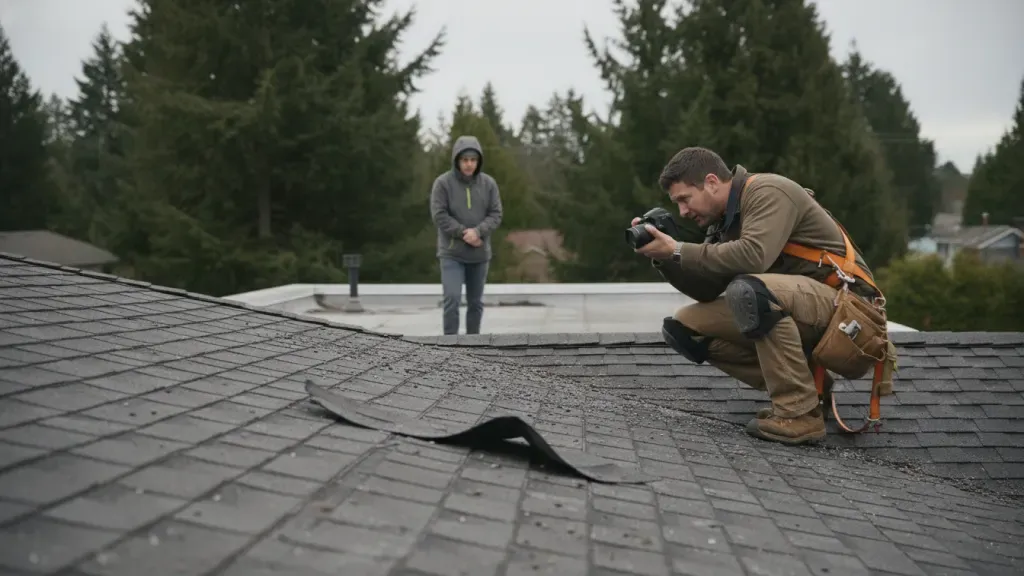
A roofing contractor can inspect the roof, document visible conditions, prepare a repair or replacement estimate, and explain what work appears necessary. The contractor can also help identify temporary measures that may reduce additional water entry. That information can make a claim easier to discuss, but it does not guarantee coverage or determine the insurer's settlement.
For a Portland homeowner, useful documentation should be specific rather than dramatic. A strong inspection record may include:
The date of the inspection and the date of the reported storm or event.
The roof areas inspected and any areas that could not be safely accessed.
Photos showing the location and condition of missing, lifted, cracked, or punctured materials.
Evidence that helps distinguish sudden damage from older wear or maintenance concerns.
A clear scope of temporary repair, spot repair, slope replacement, or full replacement, with the reason for each recommendation.
Be cautious with anyone who promises that insurance will definitely pay, encourages you to exaggerate damage, or pressures you to sign before you understand the scope. Your contractor and insurer have different roles. Ask questions, compare the written information, and make the decision that fits your policy and home.
When does it make sense to pay for roof work out of pocket?
Paying out of pocket may be worth considering when the expected covered damage is close to or below your deductible, when the roof needs maintenance rather than storm repair, or when you want an upgrade beyond the policy's covered scope. Oregon DFR recommends considering the benefits and costs of a claim, including the deductible and possible effects on future premiums or coverage.
That does not mean homeowners should avoid every claim. A large, sudden loss may justify notifying the insurer even when the deductible is substantial. The practical question is whether the likely covered repair or replacement is meaningfully greater than the deductible and whether the claim meets the policy's requirements. Ask your agent or insurer about the potential consequences before making a decision.
If the roof is aging but not storm-damaged, start with a professional condition assessment. A repair, maintenance plan, or targeted replacement may be more appropriate than treating an end-of-life roof as an insurance loss. SA Roofing's Portland roof repair versus replacement guide can help frame that conversation.
What should Portland homeowners ask their insurance company?
Before authorizing major work, ask direct questions and request the answers in writing when possible. The exact answers depend on your policy and the facts of the loss.
What cause of loss does my policy cover for this event?
What is my roof deductible, and is it a flat amount or a percentage?
Does my roof have actual cash value or replacement cost coverage?
How does the insurer handle depreciation and recoverable depreciation?
Does the policy cover only the damaged slope or could matching materials affect the scope?
What temporary repairs, inspections, receipts, and photos do you need?
Are there deadlines for reporting the claim or completing covered work?
Who should answer questions if I disagree with the scope or settlement?
If you cannot resolve a question with your carrier or agent, Oregon homeowners can contact the Oregon Division of Financial Regulation for help understanding the claims process and consumer options. The agency lists free consumer assistance on its storm insurance resource page.
Frequently Asked Questions
Will homeowners insurance cover a 20-year-old roof?
It depends on the policy, the roof's condition, and the cause of the damage. Age alone does not establish coverage. A covered storm event may still be evaluated, but depreciation, exclusions, prior wear, and the policy's roof settlement method can reduce or eliminate payment.
Does homeowners insurance cover roof leaks from rain?
It depends on why the roof leaked. Rain entering through sudden storm damage may be evaluated differently from water entering through worn shingles, failed flashing, or long-term deterioration. Photograph the condition, prevent additional damage safely, and ask your insurer how it wants the loss documented.
Will insurance pay for a full roof replacement after wind damage?
Not always. If only a few shingles or one roof slope were damaged, the insurer may limit the covered work to that area. A full replacement depends on the extent of covered damage, matching or repair feasibility, policy terms, deductible, and the insurer's adjustment.
What is the difference between ACV and RCV for a roof?
Actual cash value generally accounts for depreciation based on age and condition. Replacement cost value generally uses the cost to repair or replace with like kind and quality, subject to the policy, deductible, limits, and required documentation. Ask your insurer which settlement method applies to your roof.
Can a roofer guarantee that insurance will pay?
No. A roofer can inspect the roof, document visible damage, and prepare an estimate, but the insurer interprets the policy and decides coverage. Choose a contractor who explains the observed condition clearly and lets you make an informed decision without pressure.
Bottom line for Oregon homeowners
Homeowners insurance may help pay for roof damage caused by a covered, sudden event, but it is not a maintenance plan and does not automatically provide a new roof because of age. Document the condition, review your deductible and ACV or RCV coverage, notify your insurer, and get a clear professional inspection before committing to major work.
This article is general educational information, not legal or insurance advice. Your policy and insurer's claim decision control. For policy-specific questions, contact your insurance company, agent, or the Oregon Division of Financial Regulation.


Comments