


Best Roofing Materials for Portland, Oregon Weather

When Portland homeowners ask about the best roofing materials for Portland Oregon weather, the practical answer is not one universal product. A well-installed asphalt shingle roof is a sensible fit for many homes, while metal or composite roofing can make more sense for a property with heavy tree cover, persistent moss, or a longer service-life goal. The right choice depends on moisture, shade, roof design, maintenance expectations, and the complete roofing system.
What makes Portland weather hard on roofs?
Portland roofs need to manage long wet seasons, shade, organic debris, occasional wind, and short periods of intense weather rather than one single climate threat. The National Weather Service notes that most of Portland's annual rain falls between mid-October and mid-May, with conditions varying across the metro area. That pattern rewards materials and installation details that shed water and dry reliably.
- Persistent moisture:
Rain repeatedly tests the roof surface, flashing, valleys, penetrations, and drainage paths.
- Shade and tree cover:
North-facing slopes and roofs beneath Douglas firs or other mature trees may dry slowly.
- Moss and organic debris:
Leaves, needles, and moss can hold moisture against the roof and complicate drainage.
- Wind and falling debris:
Exposed homes and properties near large trees need a plan for fastening, maintenance, and storm damage.
- Temperature swings:
Cool, wet seasons and occasional freezing conditions make installation timing and material requirements important.
Portland's weather does not make one material automatically right or wrong. It makes the roof assembly and site-specific recommendation more important. A suitable roof still needs correct slope, underlayment, flashing, ventilation, edge metal, and installation for the manufacturer's requirements. The U.S. Environmental Protection Agency's moisture-control guidance also emphasizes controlling rainwater and providing drainage paths through building assemblies.
Review the National Weather Service climate summary for Portland for more detail on local precipitation and seasonal patterns.
Which roofing materials perform well in Pacific Northwest rain?
For Portland homes, asphalt composition shingles, metal roofing, composite or synthetic roofing, and slate can all perform well when the product, roof design, and installation are appropriate. The best material balances water shedding, moss management, durability, appearance, structural requirements, maintenance, and the homeowner's plans for the property.
Material | Where it can fit | Portland considerations |
Architectural asphalt shingles | A practical choice for many pitched residential roofs | Look at algae resistance, shade, ventilation, roof slope, and the complete installation system. |
Metal roofing | Long-term ownership, exposed roofs, or homes where smooth water shedding is a priority | Review noise, appearance, fastening, penetrations, coatings, and compatibility with the home's design. |
Composite or synthetic shake and slate | Homeowners who want a distinctive profile with less concern about natural-material moisture behavior | Confirm product specifications, installation requirements, fire performance, and local availability. |
Slate | Homes designed for a premium natural roof and able to support the material | Weight, structure, skilled installation, repair access, and replacement matching all matter. |
Solar-integrated roofing | Projects where roof replacement and energy goals are being considered together | Evaluate orientation, roof layout, wiring, maintenance access, and whether the roof design is suitable. |
The table is a starting point, not a product ranking. Two roofs in the same Portland neighborhood can need different recommendations because one is shaded by trees, one has a lower slope, or one has older decking and complicated penetrations.
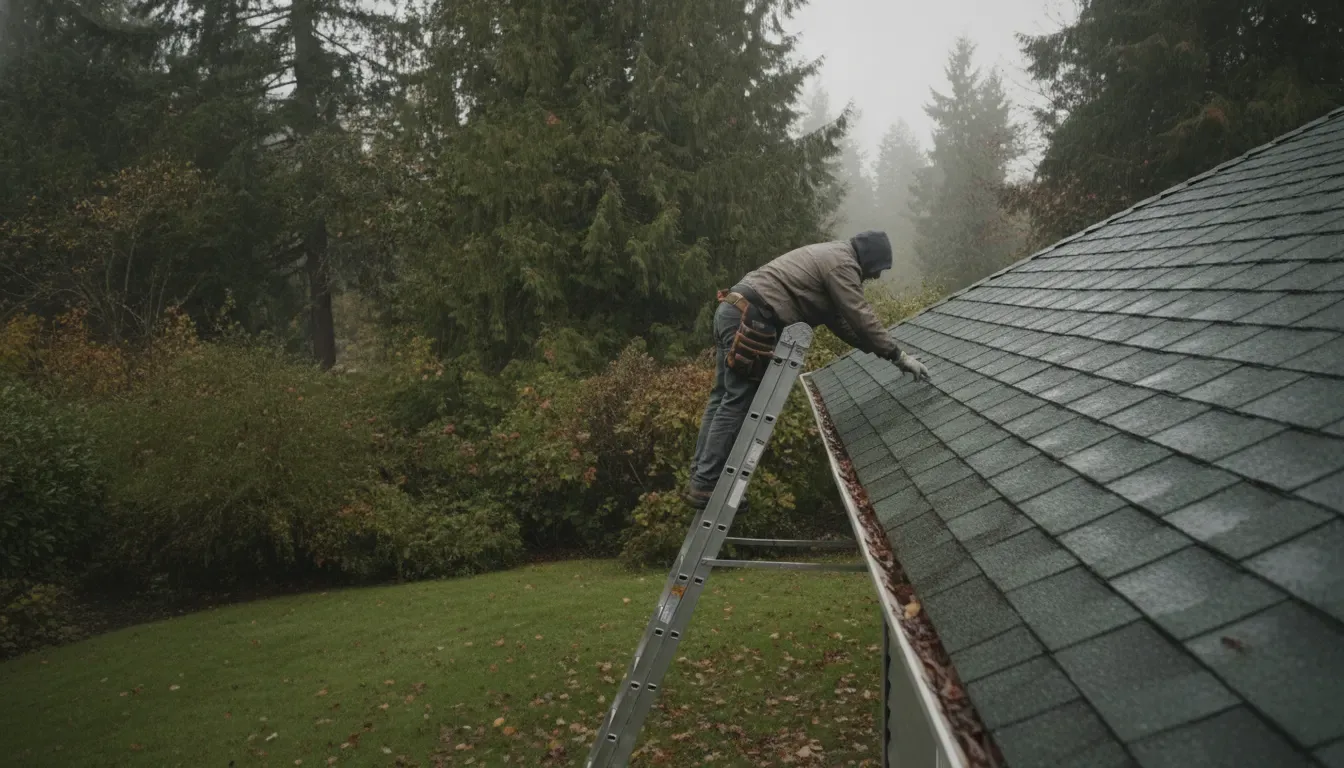
Are asphalt shingles a good choice for Portland homes?
Yes. Architectural asphalt shingles are a common and practical choice for Portland homes when they are matched to the roof and installed as part of a complete system. They can offer a familiar appearance, broad product availability, and a straightforward replacement path. In damp or shaded settings, the shingle specification and maintenance plan deserve as much attention as the color.
What to check before choosing asphalt shingles
Whether the roof slope is within the product's installation requirements.
Whether the selected shingle includes an algae-resistant surface suitable for the homeowner's goals.
How underlayment, flashing, starter materials, ridge caps, and ventilation will be handled.
Whether nearby trees will drop needles or leaves that need regular removal.
Whether the roof deck, eaves, valleys, and penetrations need repair before installation.
Do not choose a shingle by brand name alone. A properly installed, appropriately specified system can be a better fit than a more expensive product installed without enough attention to roof ventilation, flashing, or moisture movement. SA Roofing's existing Portland roofing shingles guide covers the narrower question of comparing shingle options. This article focuses on the broader choice among material categories.
Is metal roofing better for Portland rain and moss?
Metal roofing can be a strong option for Portland properties with persistent moisture, tall trees, or a long-term ownership plan, but it is not automatically better for every home. Its surface can shed rain and debris effectively, while its performance still depends on slope, seams, fasteners, penetrations, coatings, and installation quality. A site evaluation should decide whether its benefits justify the design and project tradeoffs.
Why homeowners consider metal roofing
Smooth panels or metal tiles can make it harder for leaves and organic debris to remain on the roof.
Metal provides several appearance options, from standing-seam profiles to tile-like designs.
It can be considered when a homeowner values long service life and wants to reduce the frequency of full roof replacement.
It works well as one part of a carefully designed system around chimneys, skylights, dormers, and valleys.
Metal also has tradeoffs. The appearance may not suit every home, and the roof needs careful detailing where different materials meet. Ask how the installer will handle fasteners, penetrations, condensation control, edge conditions, and future repairs. Metal does not remove the need to clear debris or inspect the roof after severe weather.
What roofing material lasts longest in a wet climate?
The material with the longest potential service life is not automatically the best value for a particular Portland home. Slate, metal, and some composite systems can be long-term choices, but their results depend on structural support, installation quality, detailing, maintenance, repairability, and product availability. A roof that lasts well on paper can be a poor fit if the home cannot support it or local repairs are difficult.
Think about service life in three layers:
- Material durability:
How does the surface respond to water, debris, temperature changes, impact, and biological growth?
- System durability:
Are the deck, underlayment, flashing, ventilation, valleys, and penetrations designed and installed correctly?
- Ownership durability:
Can the homeowner maintain, repair, and source matching materials over the expected time in the home?
For many homeowners, a well-installed architectural asphalt roof is the right balance of performance and practicality. For others, metal or composite roofing may better match long-term plans or the property's exposure. The decision should be based on the roof's conditions rather than a blanket promise that one material lasts the longest everywhere.
How should you choose roofing materials for a Portland home?
Start with the property, then compare material options against the property's actual conditions. A useful material recommendation explains why it fits the roof, what tradeoffs it brings, what maintenance it needs, and how the full installation will protect the home. Homeowners should be able to compare clear options without pressure to select the most expensive product.
1. Map the roof's exposure
Note which slopes receive shade, where moss or algae appears, how close trees are to the roof, and whether wind reaches the home. Look for valleys, dormers, skylights, chimneys, and low-slope transitions that require careful water management.
2. Inspect the roof system, not only the surface
Material selection cannot compensate for damaged decking, weak flashing, blocked drainage, poor ventilation, or incorrect installation. Ask the contractor to explain what will be inspected and whether the estimate includes the necessary layers and cleanup. For a deeper explanation of one important layer, see SA Roofing's guide to roof underlayment.
3. Match the material to the home's structure and design
Some materials are heavier or require more specialized installation than others. The roof's framing, pitch, geometry, and existing details should be considered before a homeowner commits to slate, tile-like products, or a complex metal design.
4. Compare maintenance honestly
Every roof needs inspection and maintenance. Keep gutters and roof drainage clear, manage branches that shade or scrape the roof, and address moss before it becomes established. The Oregon State University Extension Service guidance on roof moss explains why shade, trapped moisture, and unsafe cleaning methods matter in the Pacific Northwest.
5. Compare the complete proposal
Ask each roofing contractor to identify the material, underlayment, flashing approach, ventilation work, tear-off, disposal, cleanup, workmanship coverage, and any assumptions about deck repairs. Transparent scope makes it easier to compare proposals without relying on a headline product name.
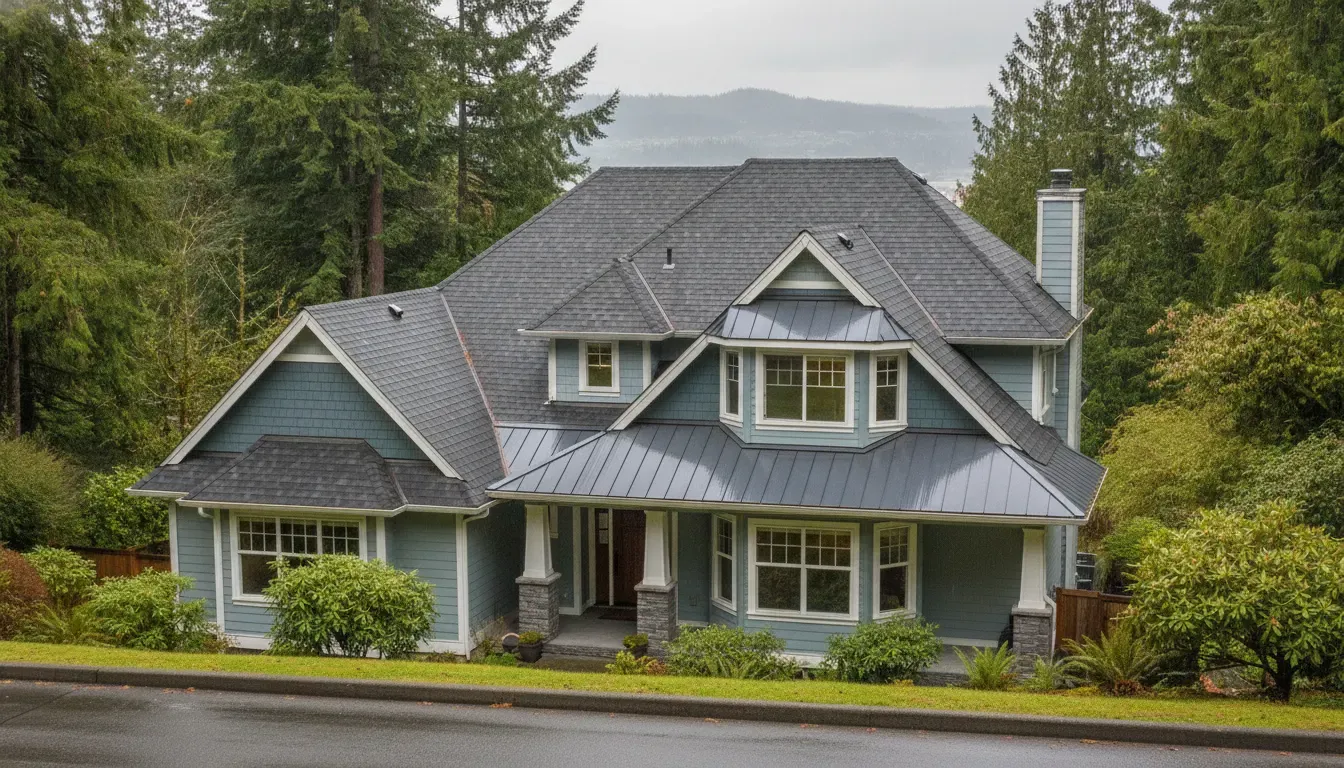
Portland roofing materials FAQ
What is the best roof material for the Pacific Northwest climate?
There is no single best material for every Pacific Northwest home. Architectural asphalt shingles suit many Portland houses, while metal or composite roofing may fit properties with heavy shade, tree debris, or long-term durability goals. The best choice depends on roof slope, moisture exposure, structure, maintenance expectations, and installation quality.
Does metal roofing prevent moss?
Metal roofing can reduce the amount of organic debris that remains attached to a smooth roof surface, but it does not prevent moss by itself. Shade, nearby trees, gutters, roof slope, and maintenance still matter. Any roof material should be inspected and cleaned with methods that do not damage the surface or surrounding property.
Are asphalt shingles reliable in Portland rain?
Yes, asphalt shingles can be reliable in Portland when the selected product fits the roof and the complete system is installed correctly. Pay attention to underlayment, flashing, ventilation, roof slope, algae resistance, and debris management. The shingle surface is only one part of the roof's weather protection.
Should Portland homeowners choose slate or composite roofing?
Slate can offer a distinctive natural appearance and long-term potential, but its weight, installation requirements, repair needs, and material matching must be evaluated. Composite roofing may provide a similar design direction with different structural and maintenance considerations. A contractor should review the home and the specific product before recommending either option.
How can I get a material recommendation for my home?
Ask a qualified roofing contractor for a roof inspection and a clear comparison of suitable materials. The recommendation should address the roof's condition, slope, shade, tree exposure, drainage, ventilation, structure, appearance, maintenance, and complete installation scope. SA Roofing's residential roofing team can help Portland metro homeowners review practical next steps.
Request a clear, no-pressure roofing estimate from SA Roofing to compare material options for your home.
Key takeaway
The best roofing materials for Portland Oregon weather are the ones that fit the home's exposure, roof design, structure, maintenance plan, and long-term goals. Asphalt shingles are a practical fit for many homes. Metal, composite, slate, or solar-integrated options may make sense in specific situations. The most reliable decision is a transparent comparison of the full roofing system, not a promise that one product works for everyone.


Comments